
What Private Exclusives and Other Trends Get Wrong
Dogs get distracted by squirrels. Humans get distracted by shiny objects.
In residential real estate, the shiny object keeps changing. Every few years, something new comes along that’s supposed to give agents an edge and sellers peace of mind. It’s pitched as smarter, faster, more sophisticated. And for a while, everyone believes.
I’ve been in this business long enough to have seen several of these cycles come and go.
When I started out, just having photos of a listing online was considered innovative. Then came video tours, which were supposed to help buyers “feel” a space before ever stepping inside. After that, 3D tours and floor plans had their moment. Each one was presented as a game-changer. None of them actually changed the game.
Eventually, they all became table stakes. And once that happens, the hunt for the next thing begins.
Virtual Staging and Seeing What Isn’t There
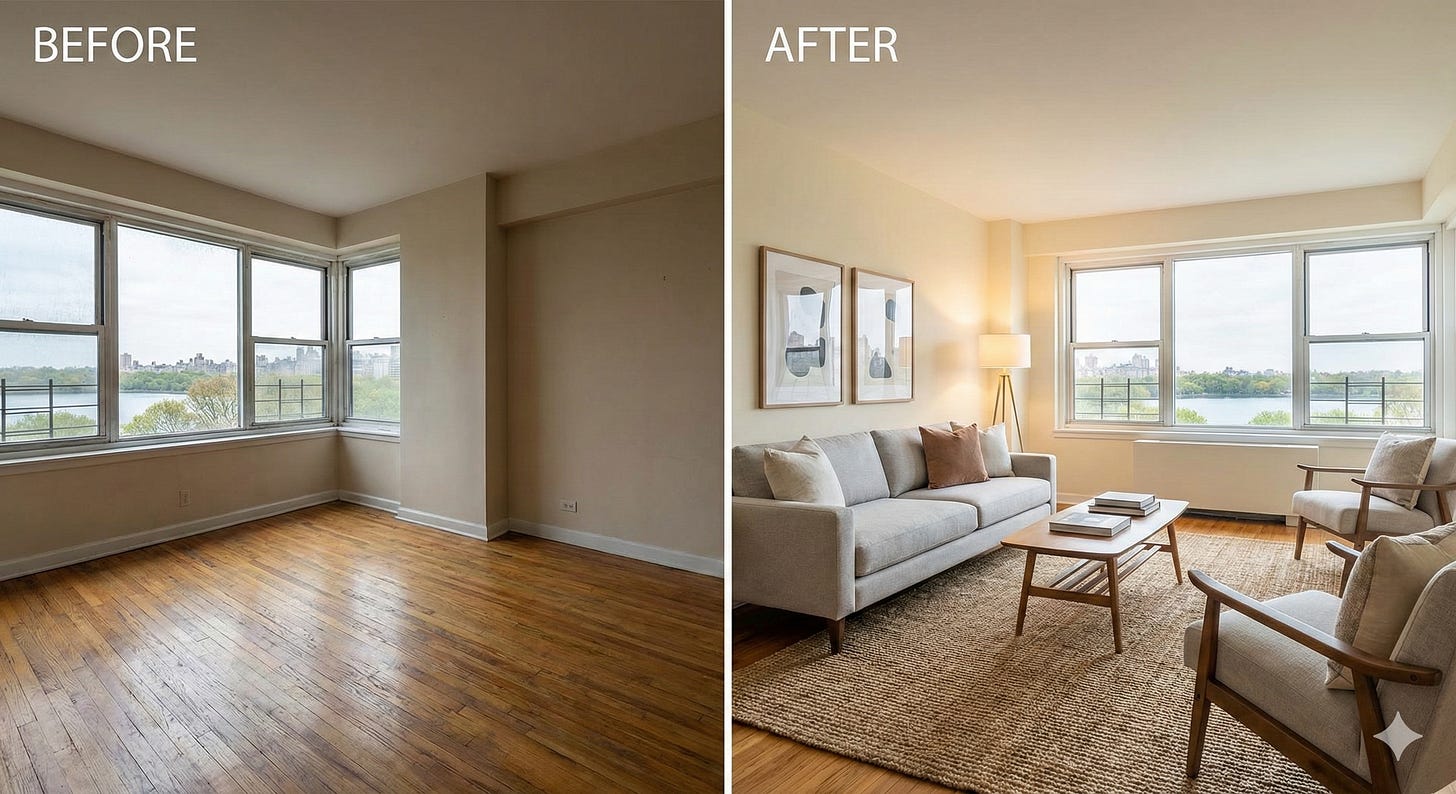
Virtual staging was one of the more interesting detours.
The idea was simple enough: if an apartment was empty, you could digitally add furniture instead of hauling in real ones. No moving trucks. No storage costs. No coordinating deliveries. Teams of designers overseas could turn around images quickly and cheaply.
At first, it worked. Listings looked better online. Phones rang. Buyers showed up.
But then something else happened. Buyers started to feel misled. They’d walk into an apartment expecting renovations that didn’t exist. Or proportions that weren’t quite right. Eventually, people learned how to spot the tells — what was real and what wasn’t.
The novelty wore off.
Today, AI can do this work in seconds for next to nothing. But the real lesson wasn’t about technology. It was about buyers.
After more than twenty years in the business, my very unscientific conclusion is this: most buyers struggle to visualize space. Roughly 90% need help imagining what a home could be. That’s not a criticism. It’s just how people are wired.
Good agents account for that.
The Rise of Staging—and a New “Solution”
That reality helped fuel the staging boom.
Staging can mean a lot of things. Sometimes it’s simple — paint, lighting, refinishing floors. Sometimes it’s more involved. Some sellers are happy to do it. Others don’t have the time, money, or patience.
So about a decade ago, a new idea emerged. A well-funded company decided they would front the money for staging and light renovations, as long as they were paid back at closing. For a while, it sounded like a great solution.
And then COVID arrived.
Furniture sat stuck in apartments for months. Rental fees kept running. Sellers assumed staging would remain free indefinitely. Stagers, agents, and companies took the hit. Conversations got tense. In markets like New York City, where many sellers can afford their own improvements, the shine faded quickly.
It stopped being a differentiator.
Enter the Latest Star: Private Exclusives

Fast forward to today, and the newest shiny object has arrived: the private exclusive.
It’s marketed as a way to test pricing, gather feedback, and build anticipation before a listing hits the public market. Slick presentations. Confident language. A sense that this is something special.
To be fair, this isn’t a bad idea. It’s also not a new one.
Good agents have always shared listings quietly before going live. They’ve always asked colleagues for feedback. They’ve always tested assumptions before rolling something out publicly. What’s new is that this behavior has been branded, packaged, and sold as a product.
Does it work? Sometimes.
If you’re at a large firm with a deep bench of capable buyer agents, it can help validate pricing and surface useful feedback. Occasionally, it results in an off-market deal. Buyers do tend to penalize listings that sit too long, so there’s logic here.
But it’s still just one tool.
When Off-Market Actually Works
A few years ago, I was preparing to market a five-room apartment with incredible river views. It also needed a lot of work. I worried buyers wouldn’t get past the mess.
I mentioned it casually to an agent friend at another firm. He immediately had a buyer who’d been searching for something just like it. We showed it the next day. A deal came together quickly. Everyone was happy.
This kind of thing has always happened.
Agents talk. They compare notes. They stress-test pricing. Sometimes you get valuable insight. Sometimes you get feedback that’s overly cautious, and you trust your own experience instead.
Outside New York City, short-term exclusivity is even more common. Firms often try to sell listings internally first. You can’t blame them. In a perfect world, agents would love to do every deal without competition.
But real estate is a relationship business. Short-term wins can create long-term problems. Most experienced agents know where the line is.
The Pushback
Once private exclusives were formalized and marketed, scrutiny followed.
Some people began asking whether these listings disadvantage certain buyers, or whether limiting public marketing creates inequities. It’s not a comfortable conversation, but it’s a fair one.
If a property isn’t publicly marketed, fewer people will know about it. That doesn’t mean sellers won’t get strong prices. I’ve negotiated plenty of off-market deals that were great outcomes for buyers. But access matters, and no single company has a monopoly on talent or fairness.
At the end of the day, private exclusives are a choice. They may make sense for some sellers. They may not for others.
So What’s Actually Worth Paying Attention To?
Here’s the part no one likes, because it’s not very exciting.
The most important factor in a successful sale isn’t the latest marketing tool. It’s judgment. It’s experience. It’s knowing how to adjust when the market shifts and the original plan stops working.
It’s much more fun to say, “We never even went to market.”
Less fun to say, “We priced it right, marketed it intelligently, and made adjustments along the way.”
But an agent’s job is simple, at least in theory: help a seller get the most money, in the least amount of time, with the least amount of stress.
The agents who have lived through multiple market cycles — who know when to push, when to wait, and when to change course — will always outperform those chasing the newest shiny object.
Flash fades. Judgment compounds.
If this resonates…
If you’re selling a home—or even just thinking about it—the right question usually isn’t “What’s the newest thing we can try?”
It’s “Who knows how to read the room, adjust when the market shifts, and make smart decisions when there’s no perfect answer?”
If you want fewer gimmicks, less hype, and a more honest look at how real estate deals actually get done, subscribe here. I write about what works, what doesn’t, and what people don’t always say out loud.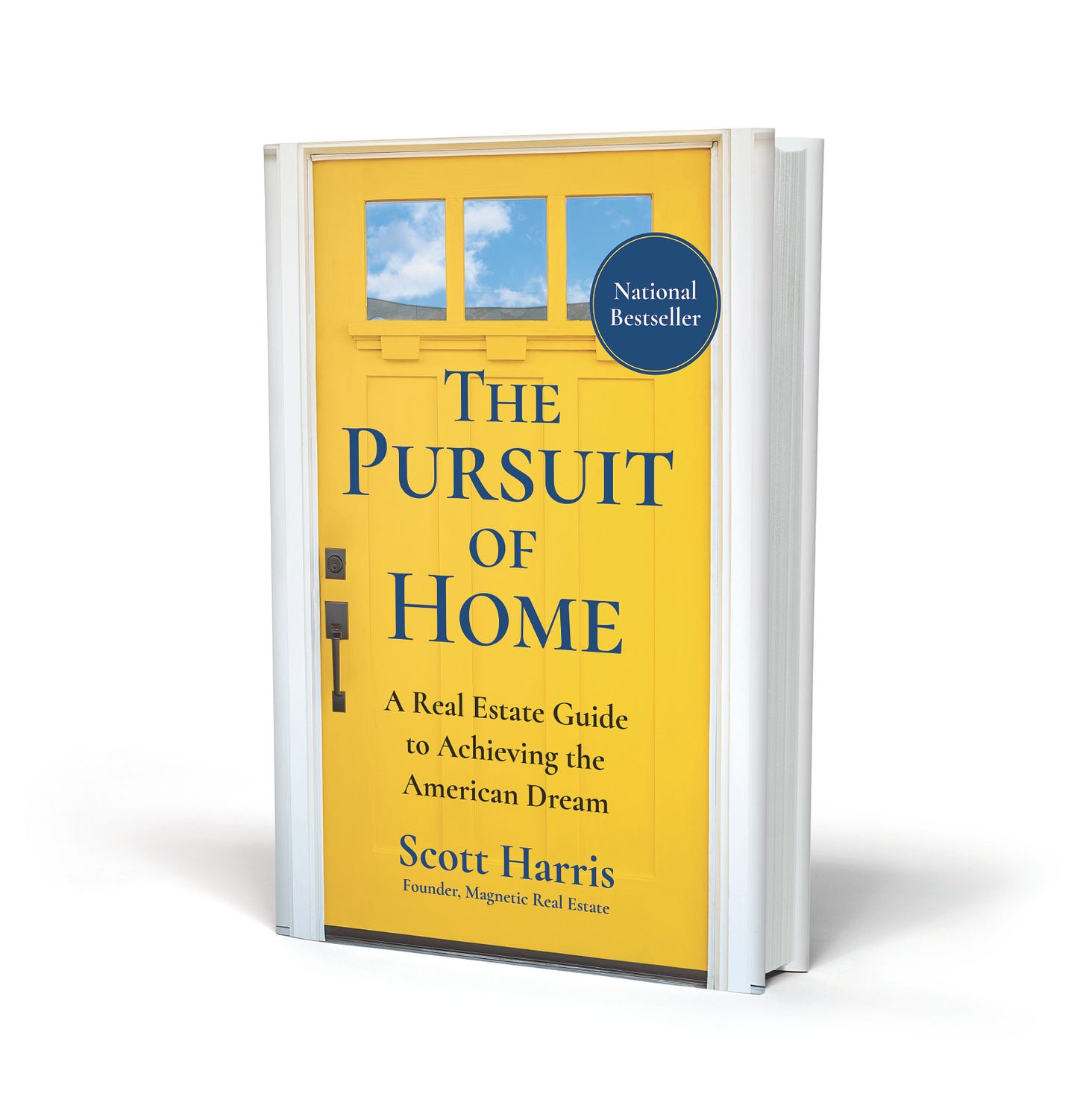
Scott Harris is the founder of Magnetic, a New York City–based residential real estate firm focused on thoughtful strategy and disciplined execution. He is the bestselling author of The Pursuit of Home and has spent more than two decades guiding buyers and sellers through multiple market cycles.