We all know about those “tree-lined blocks” real estate agents—people like me—rave about. Looking past the broker babble, you know it’s true: streets are just better when there’s green along them.
If you’ve ever been to Paris, you know the strange, beautifully shaped trees of the Tuileries Garden. If you walk through Central Park—the beating heart of New York—you see trees that were placed, pruned, and nurtured to construct a very specific kind of urban sanctuary.
But there is another kind of tree in the city.
It’s not the tree planted by the Parks Department or theorized by the NYC Urban Forest Project. Nor do we mean perfectly manicured gardens or or those trees dropped into a concrete tree well with a polite little metal guard around it, either.
We’re talking about the volunteer tree.
Think A Tree Grows in Brooklyn. Think about the courage it takes to grow up, tree or animal, in the rough and tumble of the city. The volunteer tree doesn’t ask for permission to grow. It doesn’t wait for a budget line item or a city planner’s blueprint. It just shows up, completely unannounced, drops its roots into a crack in an alleyway or a sliver of dirt beside a wall, and decides: This is where I’m going to make my stand.
Agency in the Concrete
I love the idea of volunteer trees because I want to believe that our leafy friends have free will. We spend so much time trying to control our environments—especially in real estate, where everything is about square footage, floor plans, and staging. But these trees choose to exist in ugly, forgotten spaces and, simply by being there, make them beautiful.
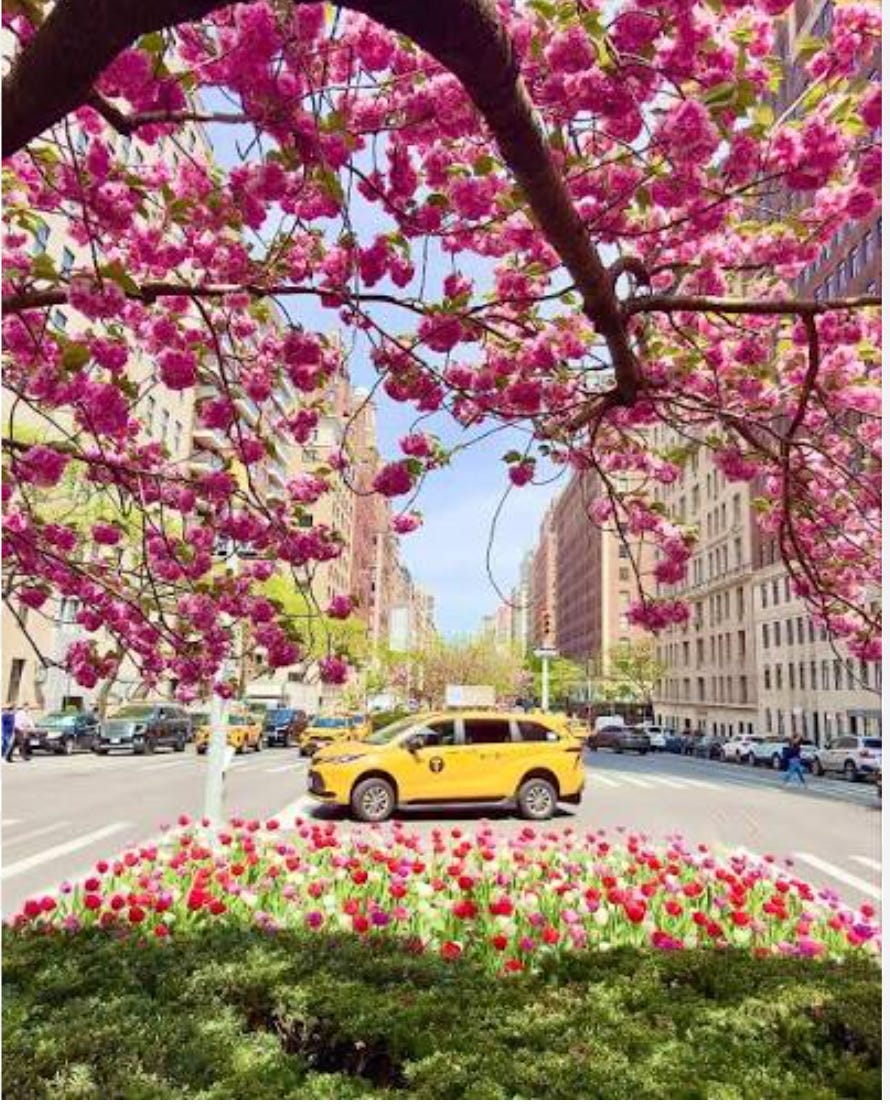
Take a walk around New York City right now and you’ll see them everywhere. You’ll see them up on 125th Street, down along Fifth Avenue, or tucked away on quiet side streets in Midtown. These are the places where old buildings were torn down to make way for the next grand architectural statement—a sleek new tower, a luxury project, a grand vision. But then the market shifts, financing gets complicated, or a project stalls out for any number of reasons.
So the city waits. The developers wait. The lenders wait.
The trees? The trees don’t wait for anybody.
While everyone in the Not in My Backyard (NIMBY) camp is sitting around complaining about the next classy tower to get built in their neighborhood, or others are simply waiting for an apartment to be built that they might purchase or rent, the volunteer trees jump right in. They look at a dusty, abandoned construction site behind a chain-link fence and decide, “This seems like a pretty good place to grow.” Before you know it, what was supposed to be a temporarily hollowed-out blighted lot becomes a wild, green sanctuary, springing up right out of the gravel and foundation bed.
Adapting to the Environment
Trees are pretty incredible creatures.
Years ago, I was having a meeting with a client in her backyard. She pointed to a tree near the property line and told me that when heavy construction started on the lot next door, the tree literally changed genders. I had no idea a tree could even do that. It adapted to a threat in its environment just to survive, as many trees do.
It makes you stop and ask a question: When a volunteer tree starts growing in some random, awkward patch of land in an alleyway or a stalled Midtown lot, is it an accident? Or is it doing it on purpose? Is it trying to make its little corner of the world better?
Trees, Trees Everywhere
I’m reminded of a small corrugated steel warehouse in Uptown New Orleans I once invested in. It housed a series of different commercial tenants over the years. Now, if you know anything about New Orleans heat, you know it’s relentless. A metal building in the middle of a Louisiana summer is essentially an oven.
Yet, right next to the entrance of this building, a volunteer tree had taken root.
Against all odds, that tree grew wide and lush enough to shade the structure. It cooled the building by a good 10 to 15 degrees. Because of that single, unprompted tree, businesses were able to operate out of that metal warehouse for years without air conditioning. It just showed up and provided shade to people who needed it.
Then came a particularly brutal storm. It damaged the tree, and it became clear that for safety reasons, it had to be removed. Because of local city regulations, we had to jump through endless hoops just to get permission to cut it down. We actually had to prove it was a volunteer tree to get the permit.
How do you prove a tree is a volunteer? Do you ask it if a person put it there, or if it chose to be there? In the end, you just look at where it’s standing. You look at a spot so improbable, so inconvenient to human planning, and you realize: Nobody would ever plant a tree there. Only nature would be that bold.
Giving Us Their All
In the dead of summer, when you’re walking down a scorching New York sidewalk and the asphalt is radiating heat, you step into a pocket of shade cast by a thick canopy above. The city has had massive initiatives over the years—planting thousands of trees across the boroughs. We don’t always appreciate it when we look at the expense lines on the municipal budget, but we feel the relief every single day (just look at this tree map!).
Whether it’s a planned oak on an avenue or a volunteer ailanthus pushing through the fence of a stalled 125th Street site, these trees give us their absolute all when it’s hottest. They offer shade, oxygen, and beauty without asking for a single thing in return.
Maybe there’s a lesson in that for how we find our own places in the world.
We don’t always get planted in manicured gardens. Sometimes, home isn’t a place that was neatly laid out for us on a silver platter. Sometimes, making a home means pulling a “volunteer tree” move—showing up in an unexpected place, dropping your roots right into the pavement, and deciding to make something beautiful out of where you are.
About Scott
When he is not anthropomorphizing trees, or binge watching almost anything but real estate shows, Scott Harris is busy helping people navigate the wildest transitions of their lives.
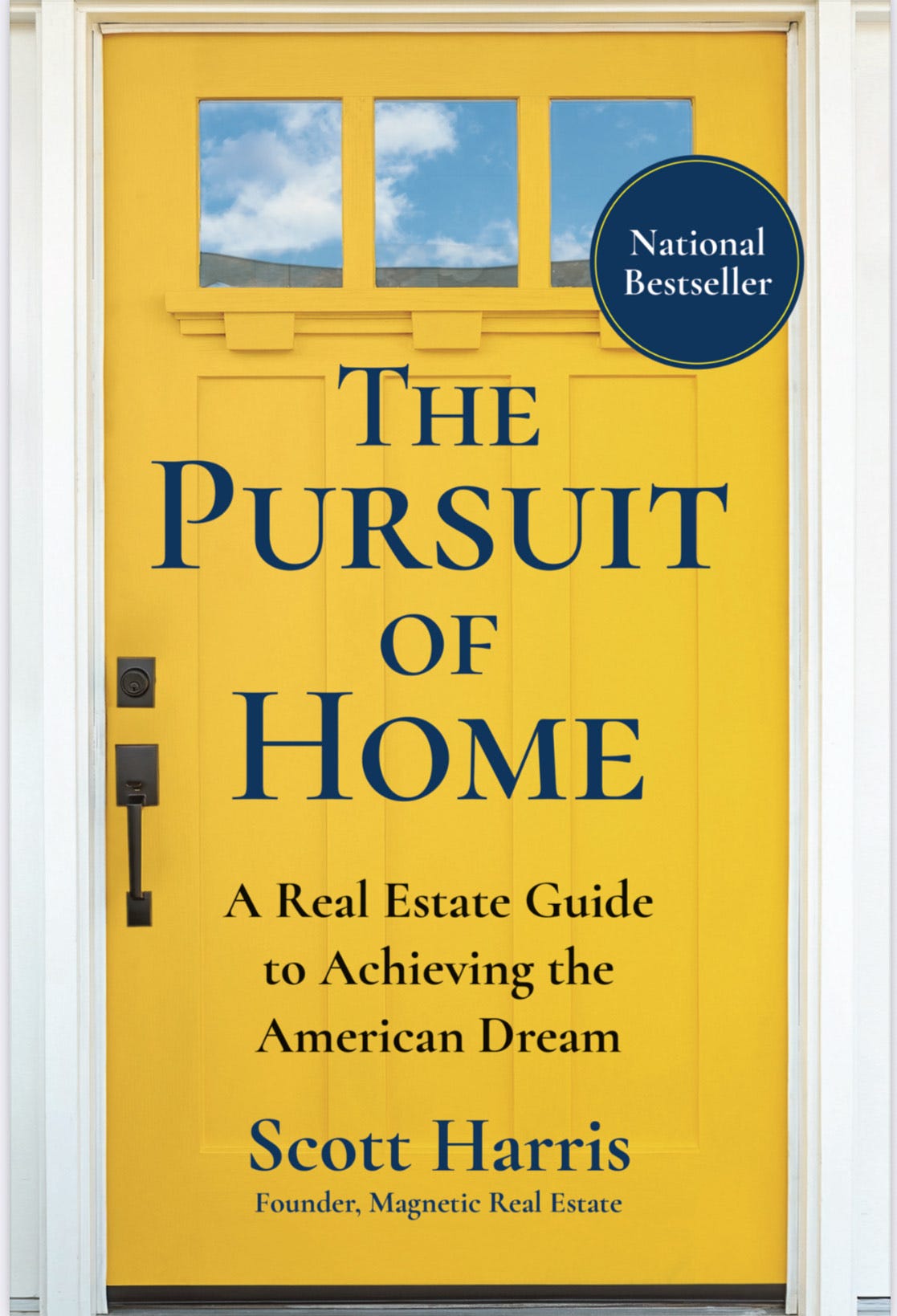
He is the founder of MAGNETIC, an independent residential real estate firm dedicated to making big dreams come true through real estate, and the author of the step-by-step real estate roadmap, The Pursuit of Home. Over a twenty-year career closing nearly two billion dollars in residential sales, Scott has operated as equal parts strategic advisor, business coach, and property (and arboreal) therapist.
Whether he is decoding the ins and outs of xylem and phloem, learning unpronounceable tree species, or basking in the shade, Scott’s heart remains locked onto the little things that make New York great.
He lives in Manhattan with his wife and children, where he remains a card-carrying, stubborn believer in Central Park, walks under the trees, and real estate miracles.