Europe Reminds Us Of What Was Possible
This past spring, I was wandering through the Gothic Quarter in Barcelona and navigating the tiny, winding cobblestone streets of Old Town Kraków. Aside from all the stunning Art Nouveau details, if you look up in either city, you'll catch something magical: bridges made of stone, timber, or delicate ironwork suspended way above the street.
They're sky bridges—essentially architectural secret passages connecting historic buildings together.
Some are just six feet wide, built centuries ago so noble families could skip stepping into the muddy, filthy streets below. Others are grand, multi-story walkways added later as buildings grew into each other. If you walk around these old European city centers, you'll see them everywhere: practical, a bit mysterious, and undeniably romantic.
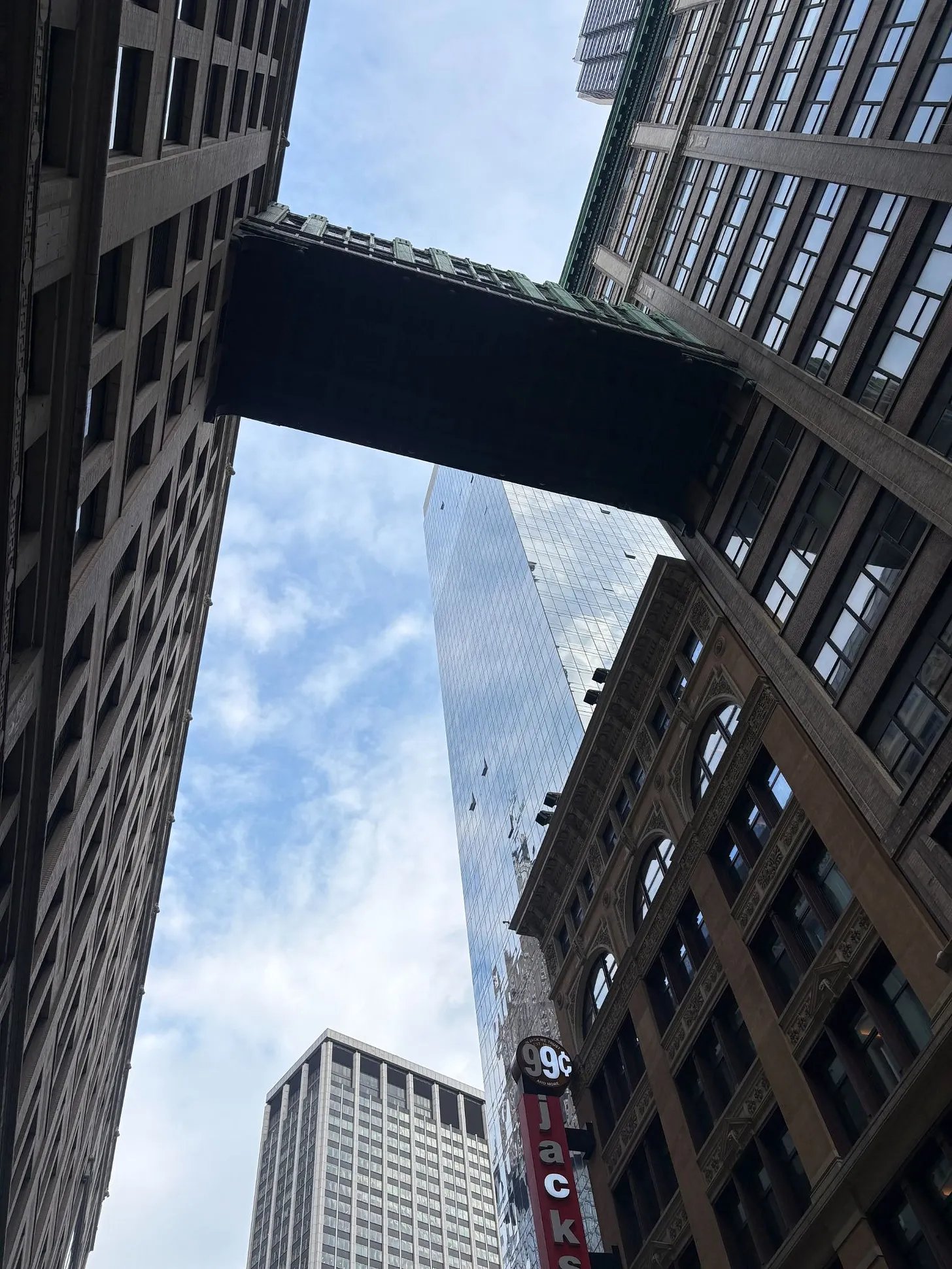
One of the few remaining skybridges in NYC, near Penn Station on West 32nd Street between 6th and 7th Avenues.
These high-flying hallways aren't a new idea by any stretch. Yet, with all our sky-high towers, packed downtowns, and modern engineering marvels, true sky bridges feel like a total relic of the past.
Walking through New York, you have to wonder: Why did these clever, beautiful connections almost completely disappear from our modern cities?
Sure, almost every band over the last 60 years and half of Instagram have headed down to Tribeca to strike a pose under the classic skybridge there: the Staple Street Skybridge. But Taylor Swift managed to pull off an even wilder trick.
The Ultimate Secret Compound: How Taylor Swift Built an Invisible Sky Bridge
Here's the truth as a real estate agent in New York: in a crowded city, luxury isn't just about giant rooms—many wealthy New Yorkers often desire total privacy and seamless freedom to move around unseen.
If you're a megastar trying to connect two buildings in NYC, good luck getting permission to float a glass tube over a public sidewalk. Between strict zoning rules and tough co-op boards, it's virtually impossible. So, what do you do? You get delightfully clever.
Check out Taylor Swift's legendary real estate moves in Tribeca. Instead of fighting city hall to build a bridge through the air, she built a stealthy, horizontal highway straight through the brick walls themselves:
- The Penthouse: First, she scooped up a sprawling top-floor penthouse duplex in a former 1882 sugar warehouse for nearly $20 million.
- The Townhouse: Then, she bought the historic 1853 three-story townhouse right next door for another $18 million.
- The Connector: Here's the genius stroke: to join these two separate buildings, she bought a lower-floor unit in the penthouse building for $9.75 million off-market, knocked through the shared walls, and created a private indoor bridge between them.
By breaching those wall barriers, she joined two buildings into one private home. Serious privacy for the most famous woman in the world (perhaps).
Combining apartments inside a single building happens every day. But successfully bridging two completely distinct properties across lot lines? That's rare real estate magic.
Cool Manhattan Exceptions: The Copper vs. 1980s Design Flops
Every now and then, a daring team proves we can still build breathtaking sky bridges in dense modern cities—if they have the vision (and deep pockets) to match.
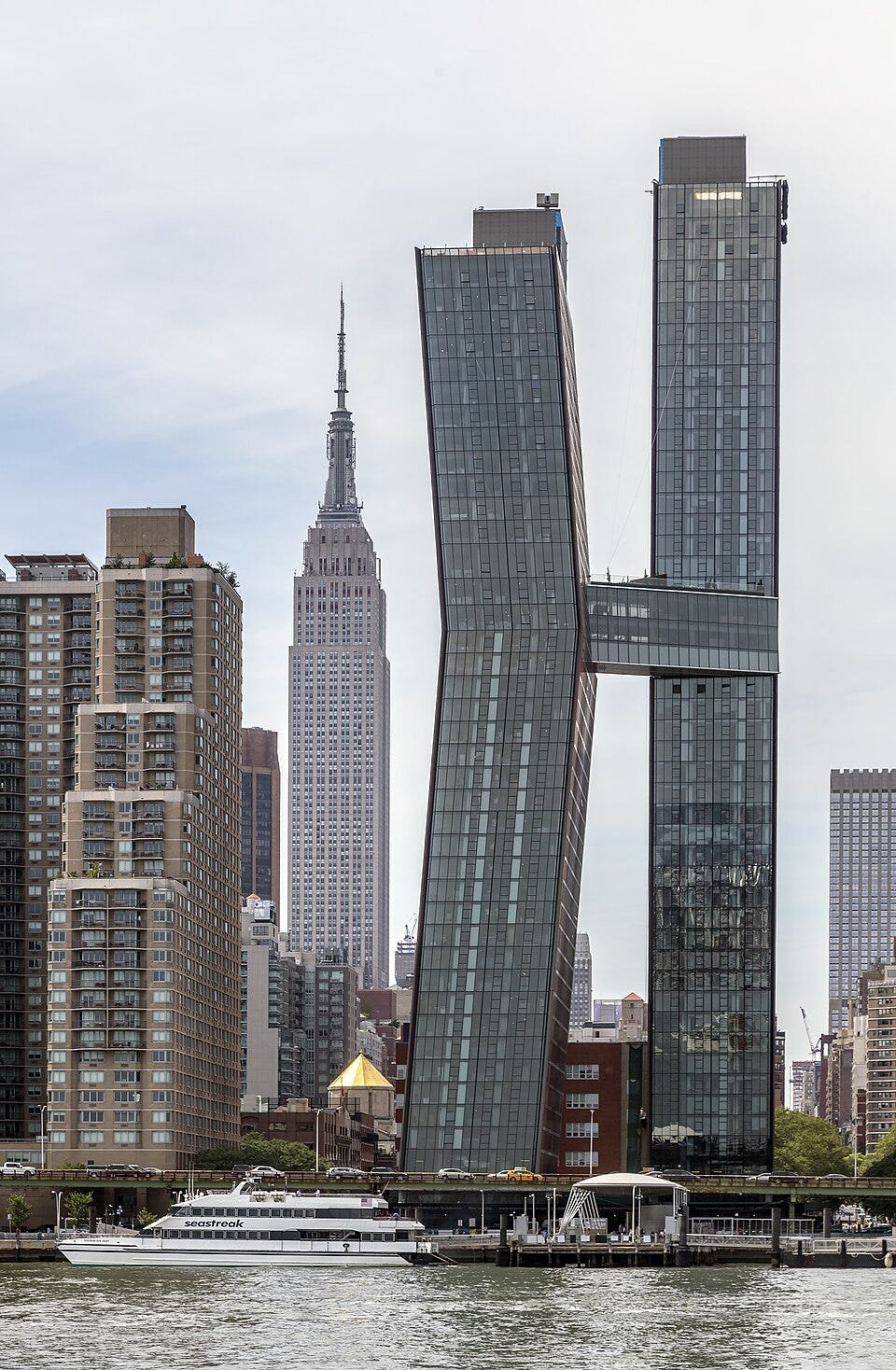
The Copper in Murray Hill
Head over to the East Side along the East River at 626 First Avenue, and you'll see The Copper (originally known as the American Copper Buildings), designed by the brilliant team at SHoP Architects. It sports a stunning, three-story metallic sky bridge floating 300 feet in the air between two copper towers. Inside? A full lap pool, a lounge, and incredible views—it holds the buildings together structurally while giving residents an unforgettable amenity space. When the developer refinanced, it was valued at well over $1 Billion, proving that bold architectural joy can create massive real-world value!
It shows us that modern engineering can easily handle wind shear and building sway. But it also reminds us why residential builders are cautious: if you design elevated connections poorly, everyday life turns into an annoying hassle.
For example, back in the 1980s, developers experimented with a much clunkier version of this idea. Complex multi-tower layouts often funneled residents into shared high-altitude lobbies—say, up on the 7th floor—forcing everyone to go up to a crossover deck just to take a second elevator bank back down to their destination. Great location, not great long-term design.
High-sky lobbies are super fun for a weekend hotel stay when you're soaking in the view. But in your own home? Having to ride Elevator A to Floor 7, haul groceries or a tired kid across a bridge, and wait for Elevator B gets old fast. That extra hassle destroys the fun pretty quickly—and nobody wants to deal with that daily route and routine.
The Unsung Heroes: Hospital Skywalk Systems
Healthcare facilities, on the other hand, embraced sky bridges out of absolute necessity.
Take a walk around medical hubs like New York-Presbyterian on the Upper East Side or Columbia University Irving Medical Center, and you'll spot glass tubes crisscrossing above the streets at almost every block.

New York Presbyterian and its many sky bridges
Hospitals don't build these for style—they build them because rolling a critically ill patient or a surgical team out onto a busy city sidewalk is simply not an option. Old buildings and new ones are constantly being upgraded. And they must be connected.
These hospital bridges prove something important: building them is clearly not an engineering problem. If a hospital network can sort through zoning codes, air rights leases, and structural sway, any developer could do it—potentially.
High-Flying Asian Skywalks and the High Line Phenomenon
While Western cities backed off elevated pathways outside of medical campuses, hyper-dense Asian centers built entire networks out of them.
Hong Kong's Central Elevated Walkway spans miles, linking office towers, transit hubs, and shops into an elevated pedestrian highway hovering above traffic. In crowded, rainy climates, these bridges keep pedestrians dry and clear out street-level foot traffic.
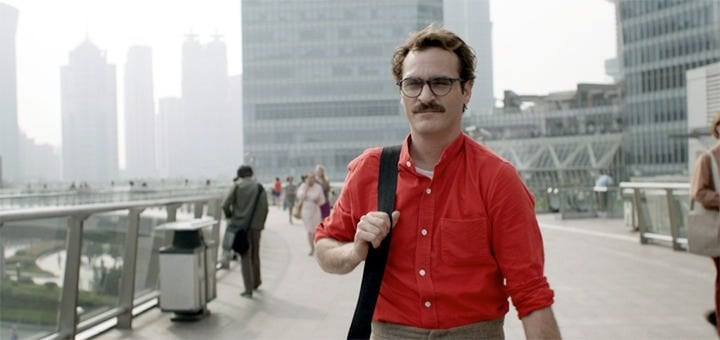
Shanghai's elevated sidewalks as featured in the movie Her
Of course, elevated footpaths have their drawbacks. Planners eventually noticed that pulling everyone up into overhead tubes can drain energy, shops, and safety from the sidewalks below.
Then came New York's High Line in the late 2000s—a massive hit that ignited a global love affair with elevated walking. But let's be honest, the High Line isn't quite a true sky bridge:
- Park, Not Commute: The High Line is a scenic linear park where we go to stroll, admire plants, and grab a coffee.
- Alongside, Not Through: It winds beside buildings rather than punching through them to connect interior rooms together.
City Bureaucracy vs. Our Secret Urges
If you ask city officials why we don't see sky bridges everywhere, they'll hand you a long, official-sounding list of reasons:
- The Air Rights Cost: Cities own the air above streets. Using that space requires endless hearings, legal permits, and hefty fees.
- The "Privatization" Issue: Zoning boards worry that elevated bridges create a divided city—a private skyway for commuters and residents above, leaving public sidewalks underfunded below.
- Fire Safety Challenges: Fire departments aren't big fans because bridges can block ladder trucks and complicate evacuation routes.
On paper, every single one of those points makes complete sense.
And yet, none of that red tape changes how we feel when we see two buildings connected high above the ground and think: I would love to walk across that.
No matter how sensible the urban planning rules are, they can't erase the fun, conspiratorial thrill of stepping into a skyway. There's something special about slipping out of one building and directly into another high in the air—skipping street level entirely like you've unlocked a secret layer of the city.
Why We Still Look Up to the Sky
As our cities get denser and ground space disappears, our desire for connected high-altitude spaces might just bring sky bridges back into style. Modern multi-tower developments are already finding new ways to share sky-high parks, pools, and co-working spots above the bustling street noise.
Beyond zoning laws, air rights, and complex engineering, the real reason we love sky bridges is simple human curiosity.
Deep down, we're all still curious kids who love secret tunnels and treehouses. Standing inside a bridge suspended high above the city taps right into that wonder—a playful moment frozen right between two worlds.

Scott's book The Pursuit of Home
Scott Harris is a veteran real estate agent and the founder of boutique New York City real estate firm Magnetic, and the author of new book The Pursuit of Home: A Real Estate Guide to Achieving the American Dream (Matt Holt Books), available now. Pick up your own copy today!