
Lately, there’s been a lot of noise about New York real estate. I hear it at parties, I hear it from out-of-town buyers, and I hear it at family gatherings. The consensus view is almost deafening: Everyone wealthy is fleeing to Florida or Texas. The market is done.
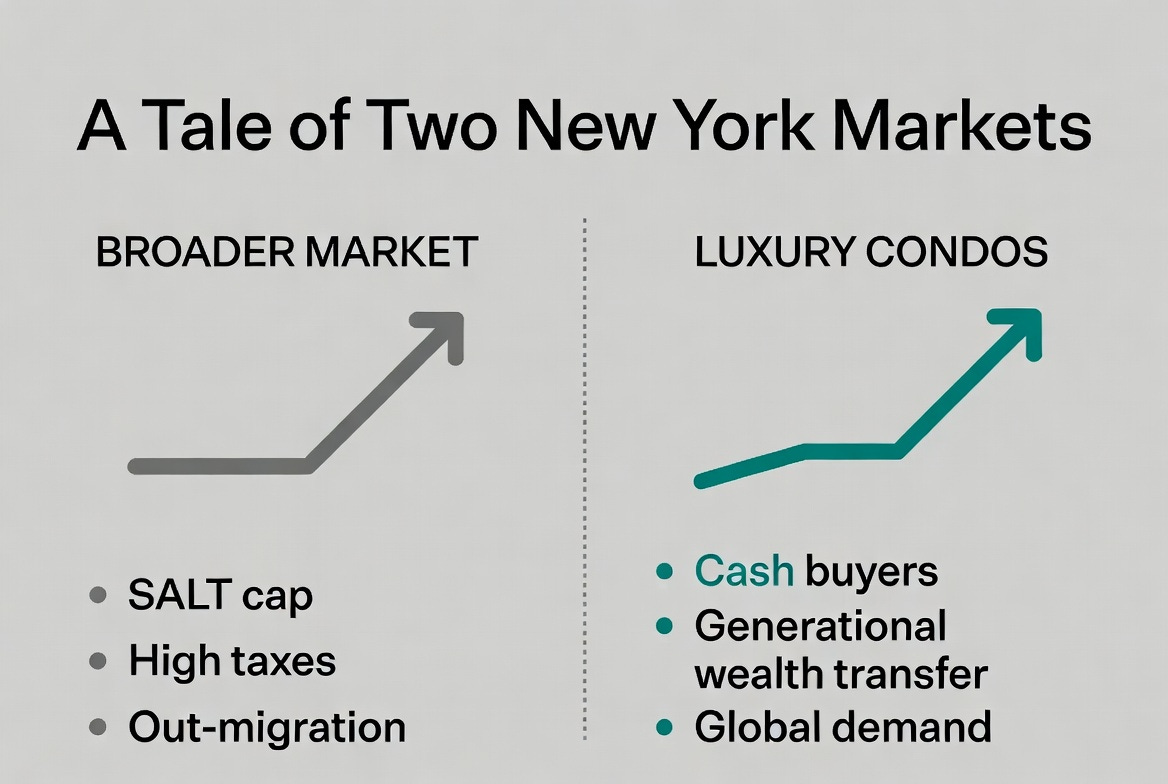
Yet when you look closer, something more interesting is happening. The broader market—think median homes, classic co-ops, and everyday properties—has been relatively flat or modestly growing for the past decade. Meanwhile, the high-end luxury condo segment has kept appreciating, often strongly. It’s not the simple exodus story everyone tells. It’s a tale of two very different markets operating in the same city.
The Headwinds That Slowed the Broader Market
Let’s start with the bigger picture. For a long time, New York real estate felt like it only went up. I literally had clients tell me this!
Then things shifted about a decade ago.
The big one everyone felt was the 2017 Tax Cuts and Jobs Act and that $10,000 cap on SALT deductions. In a high-tax locale like New York, where property taxes and state income taxes can be eye-watering, that change raised the real after-tax cost of owning a home.
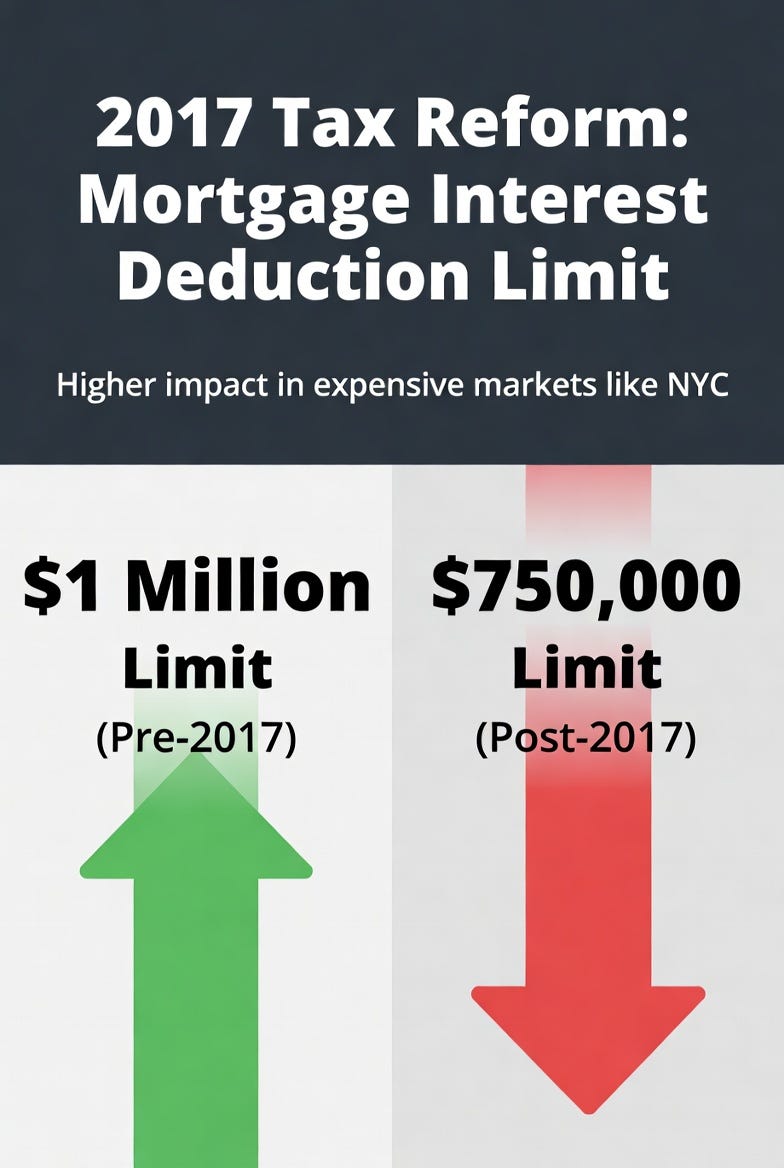
Partnering with that was the limit on the tax deductibility of mortgage interest. What had been a significantly higher number—up to $1 million of mortgage debt—suddenly dropped to $750,000 for new loans after December 15, 2017.
Then the so-called “mansion tax” expanded. What was a 1% closing cost on the total purchase price of any property north of $1mm became a calculation: those taxes got tripled over $10mm, for instance. Not ideal, and something that buyers needed time to consider.
These changes didn’t kill demand overnight, but they chipped away at appreciation, especially for financed buyers in the upper-middle range. Combine that with New York’s already high property taxes, transaction costs, rent regulations that lock up supply, and tough zoning rules, and you start to see why the everyday market lost some momentum. The 2018 and 2019 markets were appreciably slower. 2020, however, had given buyers time to absorb new realities, and things were looking up.
Then came COVID. Remote work changed everything. Suddenly, that proximity-to-the-office (or schools) premium that Manhattan had banked on for decades didn’t feel quite so essential. People left for suburbs, other states, or just bigger spaces. Out-migration stories filled the news—high earners heading to no-income-tax states.
The respite—and what people have conveniently forgotten in this current environment of prices being where they were, described as a “lost decade”—were the continued low mortgage rates in 2021 into mid 2022. There was a moment when a lot of sellers made a lot of money on their sales had they transacted in that period post-COVID.
That said, affordability pressures mounted as higher interest rates hit leveraged buyers hard. The result? The normal market—co-ops, median-priced homes, older stock—mostly treaded water or grew modestly while other parts of the country boomed.
But what had no respite during or after COVID was this: supply chains faltered, then labor costs doubled, and suddenly the cost of renovation went up 30%, 40%, sometimes 100%. What had been typical renovation costs of $200–500 per square foot changed—and never looked back. And all of this was before the 2024 election and before tariffs became a touchpoint for rising costs of lumber or anything coming in from abroad.
The costs of operating a building—any building, certainly co-ops and condos—also went up. This isn’t exactly breaking news, but there were a bunch of quiet changes (some not so quiet) that started to make themselves known. Think upgrading gas lines to electric in 100-year-old buildings. Think retrofitting for new trash pickup schedules, LED lighting mandates, composting rules, recycling demands, and the like. These added staff needs for smaller co-ops and a host of new protocols.
It’s the kind of slow erosion that doesn’t make for flashy headlines but quietly reshapes what’s possible for a lot of potential homebuyers.
The Luxury Condo Exception
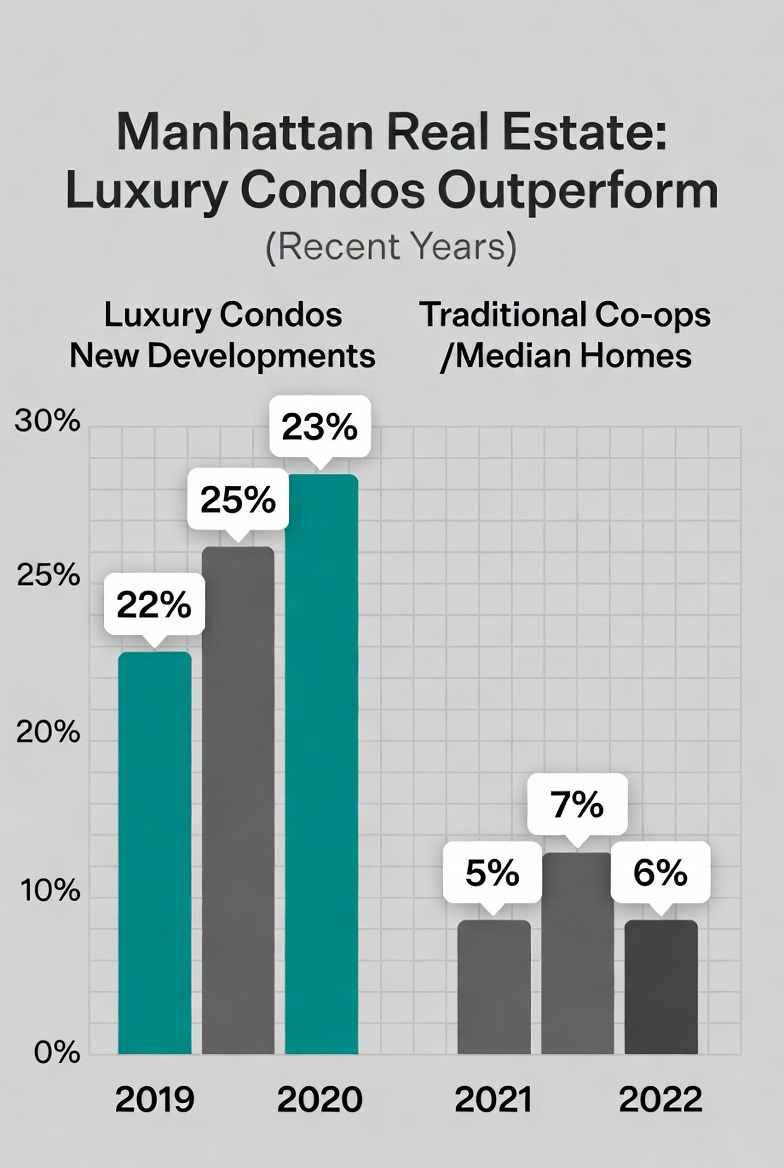
Here’s where the story gets fascinating. While the broader market cooled, prime luxury condos—especially new developments in great locations—kept finding buyers and pushing prices higher. Manhattan medians have jumped in recent snapshots (sometimes double-digit year-over-year gains), largely powered by the high end. Luxury sales volume stayed healthy, with strong activity in the multi-million-dollar range.
Why? It’s not that the wealthy all stayed put. Some definitely left. But the ones who buy at this level play by different rules.
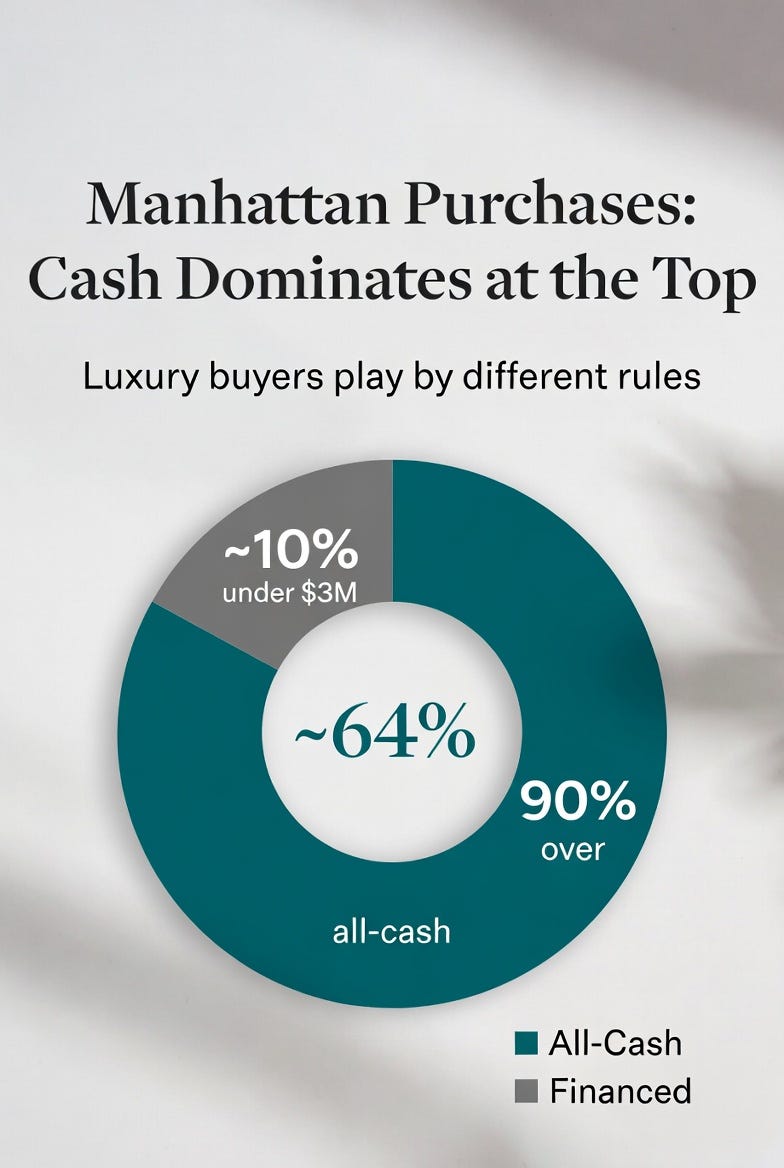
These deals are often all-cash or lightly financed (borrowing against their own wealth at much lower rates), so rising mortgage rates don’t sting the same way. Global buyers still see Manhattan as a safe-haven asset—a trophy that holds value when the world feels uncertain. Supply at the true top is ridiculously tight: full-floor residences, best-in-class new condos with killer amenities. When something special hits the market, the right buyers show up.

What No One Seems to Remember
And then there’s something quieter but powerful: the great generational wealth transfer. Trillions are moving from older generations—many of whom built serious equity in New York real estate over decades—to their kids and grandkids. That capital often flows straight into luxury condos. Families are helping the next generation plant roots (or at least a pied-à-terre) in ways that skip traditional mortgage hurdles. Modern, amenity-rich buildings in new locations like Hudson Yards, or established neighborhoods like Tribeca, Greenwich Village, or anywhere Uptown, appeal to younger tastes and lifestyles.
Younger buyers without that family capital tend to be more cautious. They feel the weight of high carrying costs, taxes, rates, and uncertainty more acutely. It’s not about smarts or drive—it’s about starting positions in a high-barrier city. Established wealth recycles at the top while the broader market feels every headwind.
This split challenges the “everyone’s leaving” narrative. Yes, domestic out-migration is real. But international inflows, concentrated wealth in finance and tech, and intergenerational transfers keep the luxury engine humming. People still move here in droves. Just call a mover, or call a parent whose child just graduated from college. New York is still where it’s at.
What It All Means
New York is still New York. It has that irreplaceable energy, global status, culture, and transit that people crave. The city retains serious gravitational pull for those who can make the math work—or who simply decide the lifestyle is worth it.
But the bifurcation is instructive. Policy choices (taxes, regulations, supply constraints) and big shocks (pandemic, remote work) have real consequences. They’ve tempered broad appreciation and made the everyday pursuit of home more challenging for many. At the same time, extreme scarcity and different buyer dynamics protect the top.
And now there are some taxes which are threatening to upset the apple cart. Will a pied-a-terre tax come into effect? What about a new 1% tax on all-cash purchases over $1million? I am dubious, but I’m also in the market for a new home in this moment. These are real concerns, not to be simply ignored, either.
For anyone navigating this market—whether you’re buying your first place, trading up, or thinking about the luxury tier—understanding these layers matters. It’s not just data. It’s about aligning your move with where you are in life, what you can realistically sustain, and what kind of future you’re building.
Homeownership has always been deeply personal. In New York especially, it tests your clarity, resilience, and vision. The market doesn’t move in straight lines, and neither does life. Sometimes the broader story feels stagnant while certain segments surge forward. The key is knowing which part of the story you’re actually in—and making decisions with eyes wide open.
If you’re in the middle of your own pursuit right now, I’d love to hear where you are in the journey. Drop a comment. And if you haven’t yet, check out The Pursuit of Home—it’s written for exactly these moments, when the path feels anything but straightforward.
Here’s to finding a place that feels like home, whatever part of the market you’re in.
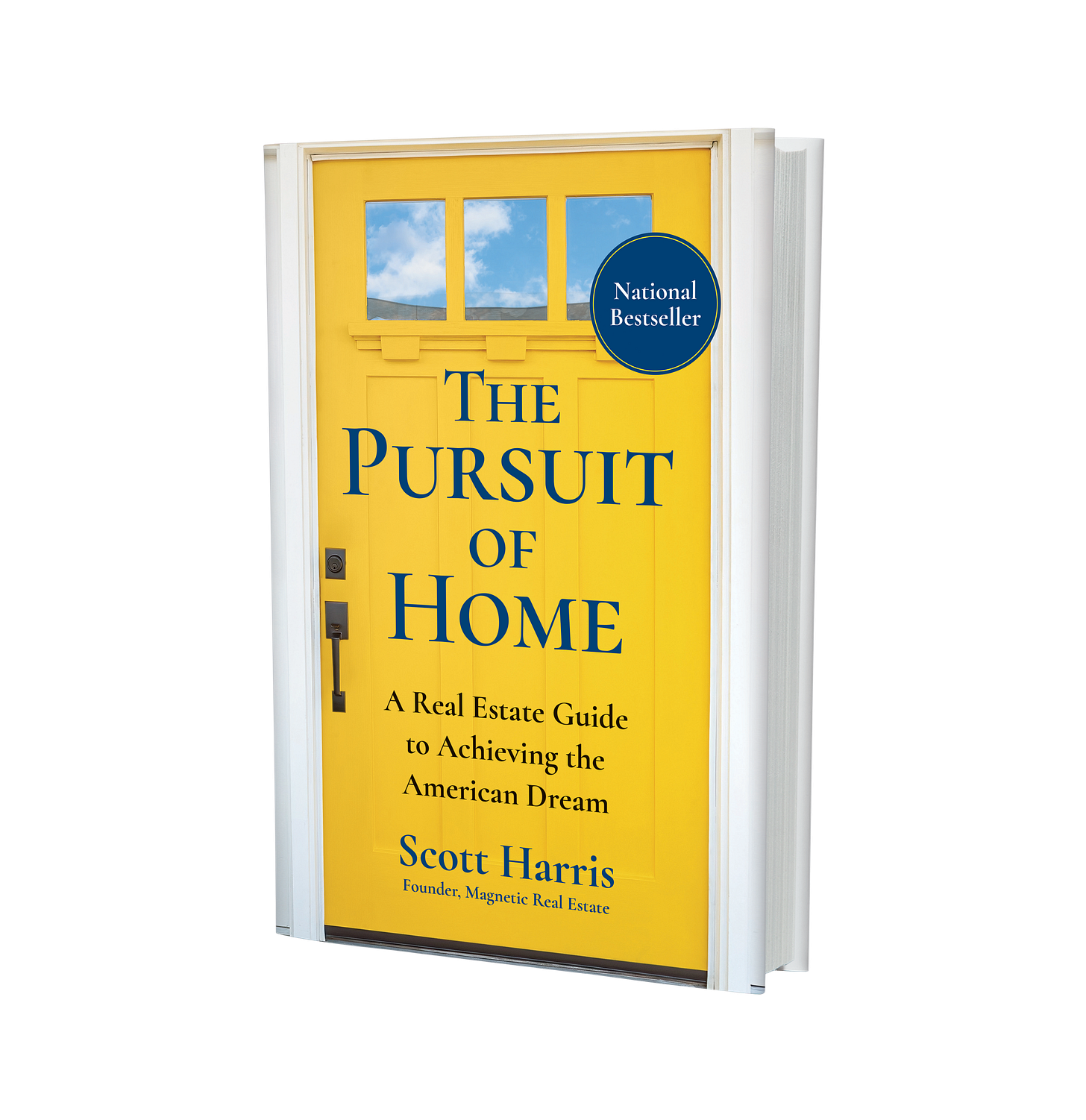
Scott Harris is the founder of Magnetic Real Estate and bestselling author of The Pursuit of Home: A Real Estate Guide to Achieving the American Dream (out now). He’s closed over two billion in NYC transactions and still believes in the magic of homeownership.