Safe & Unsafe Jobs
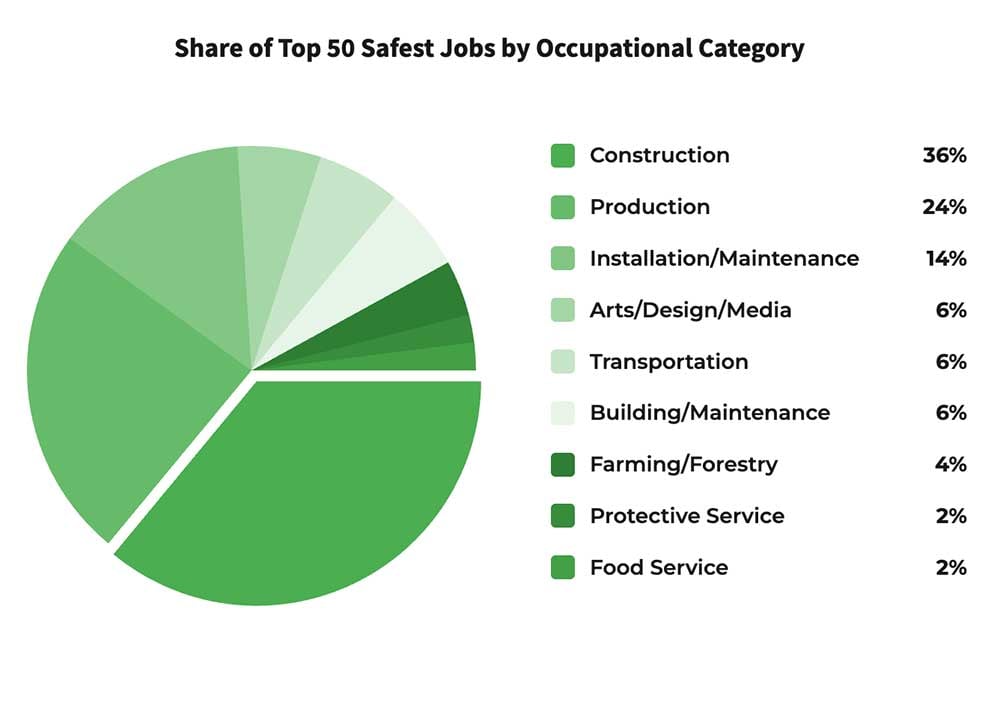
I came across this timely research study outlining which jobs are safe in a world of ever-expanding artificial intelligence. To no one’s surprise, manufacturing jobs, food jobs, all of the things that we create and utilize in the physical world, all make the safe-job list. Robots won’t be pouring concrete, welding steel, or skim coating your walls anytime soon, this study promises.
But I’ve never been happier to see that property management did not make it onto the list. Why, might you ask?
Because the long slog, a struggle that has been ever-present in any New York City real estate agent’s world, is coming to an end. I am referring to the bane of my existence: dealing with property managers. I know it sounds like I am exaggerating, and perhaps I am. But only a tiny bit.
It’s not like dealing with gatekeepers, managing personalities, and guiding stressed out, emotional, imperfect and dysfunctional human beings isn’t our mandate as real estate professionals. This is 90% of the work that real estate agents do across the country. I would argue that percentage moves to 98% in New York. We have fabulous, successful hardworking buyers and sellers who expect great customer service. Nay, they demand it. And every agent good at their job is, of course, either intentionally or unintentionally focused on delivering what Will Guidara calls “unreasonable hospitality” (it’s a fabulous book about the restaurant industry and what it takes to to be the #1 restaurant in the world, by the way).
My agents and I are no exception in this focus. Over and above is our watchword. I’m not trying to brag, but we’re pretty happy with our results. Indeed, our professional lives are almost 100% great. Except…in almost every transaction we step into what feels like Cold War, Soviet-era Russia for a time.

Real estate deals, like everything else in New York, move at a brisk pace. Not only are we agents an impatient lot, but Amazon has only let us double down. We feel like every deal request can and should be handled by tomorrow. Suddenly, time slows to a crawl—when we start asking for information from the whatever company happens to manage that building. Requests that should take 10 minutes take 10 business days. Want to see the opposite of crypto-currency rapid payments? Go and try to get a questionnaire completed by a property manager’s Closing Department. It’s not hard to imagine anyone’s frustration with this state of affairs, is it?
I’m not mad at the people in these companies, per se. I know agents are demanding. And these underpaid and overworked staff are understandably miserable. All day, they are yelled at by attorneys, agents like myself, and the shareholders and buyers trying to complete a transaction. Worse than that, they spend their working hours reviewing condo and co-op applications that break out, in highlighted tables and forms, just how much more money everyone else earns paid when compared to their own piddly salaries.
I can’t think of anything more demoralizing, can you?
AI to the Rescue
What is the light at the end of the tunnel, though? It is called “Agentic AI,” and it cannot come fast enough. AI Agents thrive in situations just like this, where requests and processes are repeated again and again. These are the repetitive requests that these offices receive when processing real estate transactions:
- Supply pro forma building financial information
- Send application forms and other documents, like co-op board meeting minutes
- Complete standard building questionnaires
- Provide additional clarification based on new building information
- Create “cases” for repairs, requests and other current owner needs.
But to be certain that I wasn’t crazy, and that all of what property managers do is straightforward enough to be an effective AI use case, I went to the source. I asked the real estate attorneys, who engage with managers even more than we do, and more importantly, I went directly to property managers. Their answers? Right now, the offerings are not perfect, but they are making rapid strides in the right direction. What will happen when AI crosses that invisible barrier, not to AGI, but to effectiveness as a closing agent or closing agent assistant itself?

This will cause major disruption—i.e. significant job loss—in property management. But there is much more than a silver lining. There will be a commensurate improvement in customer service at every stage.
Yes, people in property management firms will lose their jobs. But I don’t think it’s improper to say that there must be work that is more soul-enriching than theirs. And innovation has always changed the way we do business. Email killed the fax machine. Zoom decimated office use, at least for customer service roles. And AI will kill their jobs. It’s about time that the people who have been nameless, faceless cogs in a rickety property management machine, inefficient for decades, got an upgrade, too.
What Will Happen, and Soon
These $60,000-a-year jobs will be replaced by a fleet of AI Agents at a fraction of that cost, supervised by perhaps 1-2 managers. AI will get better and better at assisting with tenant and shareholder requests, attorney requests, agent requests. The machine will hum. More deals will get completed, and more quickly, and the profit margin of these companies, always under pressure, will get a boost. It seems as obvious as the other businesses that AI has and will revolutionize.
We have already seen consolidation among these management companies in New York, if not elsewhere. For example, AKAM and Orsid, two established firms, are merging. And while they profess that their combination will provide better customer service, it is AI, not standard operational efficiencies, that will be the reason for those improvements. Until now, their customer service has been hard to scale without bringing on more poorly-paid underlings. It’s an exciting time, then, to be a property manager, even if New York has made it increasingly more expensive for landlords, building sellers or apartment owners.
What Won’t Change
Not everything will be disrupted, though. Owners will not become less demanding. Building workers—superintendents, doormen, handyman, porters—they have complete job security. Attorneys may have fewer paralegals in their offices, but will continue to squabble over deal points. Mortgage lenders may have more efficient underwriting, too.
And people will still love living in New York.

Scott Harris is a veteran real estate agent and the founder of boutique New York City real estate firm Magnetic, and the author of new book The Pursuit of Home: A Real Estate Guide to Achieving the American Dream (Matt Holt Books), available now. Pick up your own copy today!