Shocker: Buying Is Expensive
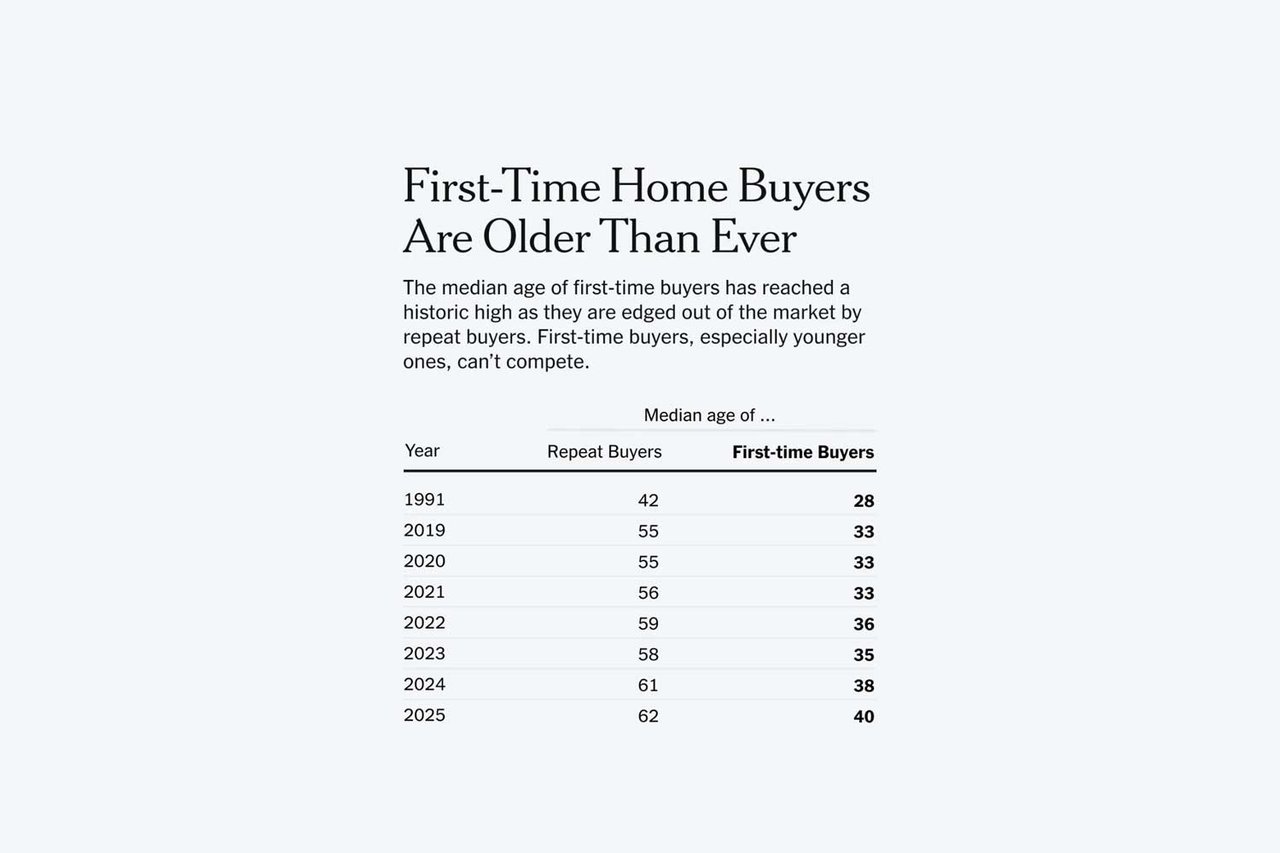
You’re going to read everywhere that the median age of first-time home buyers has gone from 28 years old in 1991 to 40 years old in 2025. And more than that, the median age of a repeat buyer has gotten a LOT older over the past 34 years. Like two decades older. What gives?
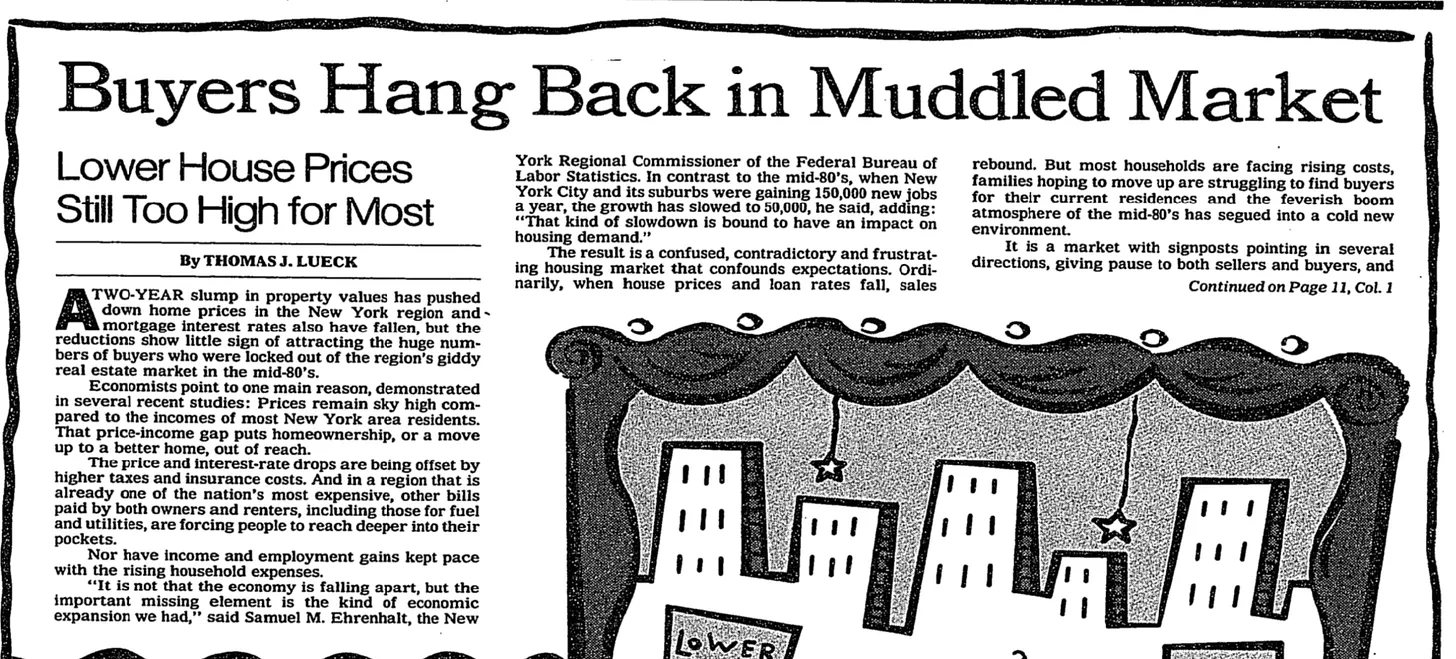
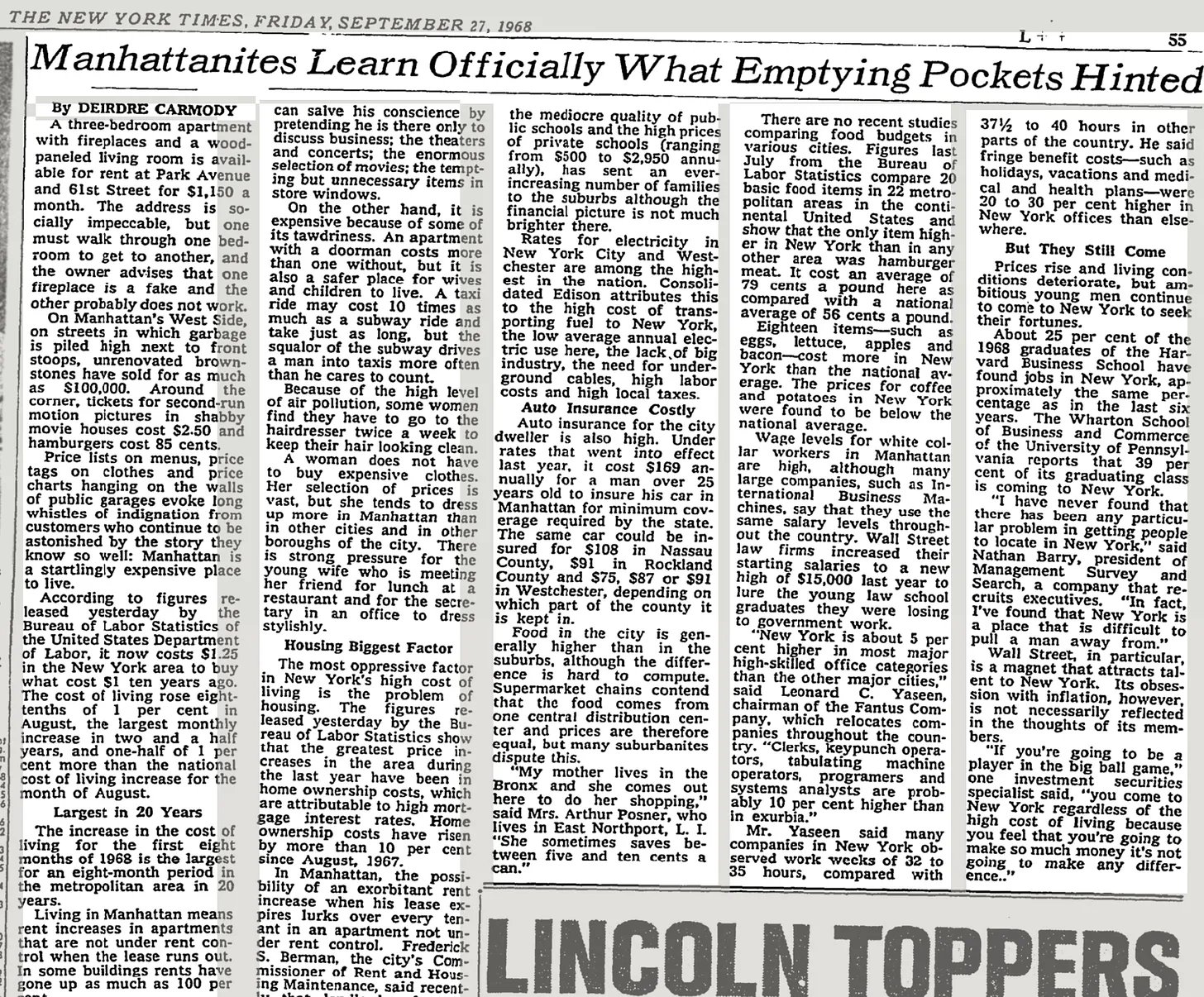
It’s potentially more expensive to buy a home today than it was in 1991, sure. But the Times has been telling the story of how expensive homes are since, well, forever. Mortgage rates were 9.1% in 1991. If you had told buyers that rates would be between 5 and 6 percent back then, they’d have looked at you like you had two heads.
My view? Buying a home always has and still feels expensive, especially in New York City. I’m going to save my thoughts on why the median age of buyers has increased as much as it has across the country. But I am going to drill down to why housing is expensive, maybe more so, in New York today.
Meet Andy and Allison
(WARNING: Buckle in, because these numbers are nuts)
Pretend you are Andy and Allison, a couple with two school-age children, earning a million dollars per year. After income taxes, you net approximately half that, or $500,000. You pay at least $10,000 a month in rent ($120,000 a year) if you’re lucky, while living expenses could be another $100,000 per year.
Your kids are in private school, too, so another one hundred thousand post-income-tax dollars or more goes out the door. The cost of school has far outpaced inflation. This is certainly new.
In many cases, though, the cost of housing is actually where it was 10-15 years ago in New York, though the monthly charges have tripled in the past 20 years. That’s also new.
So…If you are lucky, and extremely diligent, give nothing to charity, take small vacations, and have no surprises, you might save $100,000 a year to put toward your purchase. Not a small sum of money. But the starting line for the smallest three bedroom apartment in Manhattan is approximately $1,500,000. And that budget may only get you a twelve-hundred square foot apartment.
The real Andy and Allison were looking for more space than that. For two thousand square feet, they would need to push their budget to upwards of three million dollars. Even if we found something closer to two million dollars (see the example below), they still needed at least $400,000 for a downpayment- that is, a minimum 20% of the purchase price, plus a two-year cash cushion many buildings require.
We added another $100,000 for the most basic painting and tiny renovation costs. Closing costs slap on at least another thirty-five thousand dollars the budget. And all of these funds needed to be non-retirement assets- meaning, money they could access without penalty or tax consequences.
Example: Andy and Allison’s $2,000,000 purchase
Building Monthly Charges: $3,000
Downpayment of 20%: $400,000
Loan Amount: $2,000,000 - $400,000 = $1,600,000
$1,600,000 30-year fixed loan @ 5% interest rate
= $8,589 per month
Total Monthly Cost:
$3,000 + $8,589 = $11,589/month
Cushion Required by a typical NYC Co-op Board, 24 months
$11,589 x 24 = $278,136
Closing costs = $35,000
Renovation budget = $100,000
Total Money Needed for Purchase:
$400,000 + $278,136 + $35,000 + $100,000
= $813,136
Our estimate for what was required for this purchase was a total of over eight-hundred and thirteen thousand dollars. And what if the purchase price or interest-rate rose? Saving this amount would have taken Andy and Allison almost a decade, if not longer. But they had a shortcut- The Bank of Mom & Dad. Allison’s parents were willing to gift them the extra funds they needed for the purchase.

What Actually Happens in NYC—and Everywhere Else
The truth? Parents are helping out everywhere, but the numbers are eye-popping in New York. If a family earning $1 million a year can only save $100,000 per year, how would they put together $813,000 or more to make a purchase otherwise?
But looking at this everywhere else, we can imagine smaller numbers. Like $150,000 in income, and a purchase price of $500,000, with a smaller downpayment (say $100,000) and far less of a bank requirement to qualify.
The numbers are smaller, but the savings will be smaller, too.
Example: Buying Outside of NYC for $500,000
Taxes and Insurance: $10,000 per year ($833/month)
Downpayment of 20%: $100,000
Loan Amount: $500,000 - $100,000 = $400,000
$1,600,000 30-year fixed loan @ 6.144% interest rate
= $2,500 per month (in round numbers)
Total Monthly Cost:
$833 + $2500 = $3333/month
Closing costs = $10,000
Renovation budget = $50,000
Total Money Needed for Purchase:
$100,000 + $50,000 + $15,000
= $165,000
Aim small, miss small, someone once said. This is a much more manageable set of numbers. Private school becomes public school. And everything mentioned above becomes slightly less costly. This is why many people decide to leave New York City. The cost differential is so stark. It’s just more affordable to live elsewhere, even if the numbers say that people are struggling to purchase there, too.
One more note: How anyone could think that any amount of government help in New York City would ever bridge this gap between the cost of buying in NYC vs elsewhere is beyond me. The best the government can do it keep mortgage rates as low as possible. Without creating another run-up of real estate prices, of course.
So What?
New York City real estate has always been the domain of very successful people. And perhaps people with access to a lot of help from family. The question I have is: So what? Does it really matter that New York City is too expensive, or expensive, or unaffordable, or whatever adjective you put on it? People have been complaining about the city costs being “too damn high” forever.
Does this mean you can’t find a home that you love? Is it impossible to accept that your dream home may be in another neighborhood, or in the suburbs?
Put budget to the side for a second. What I’ve found is that no matter what the budget—even if you’re well-qualified and buying in the most ritzy of areas—people will expect to get more than their budget allows.
The most important part of finding a home you love, then, is dreaming big, and then allowing that dream to look different, even far different, than you first imagined. The point, though, is to dream big, to share those dreams with your spouse and your family, and to get the right people involved in your search. When you allow the universe to play a role in helping you find that home, I don’t think you’ll be disappointed in the results.
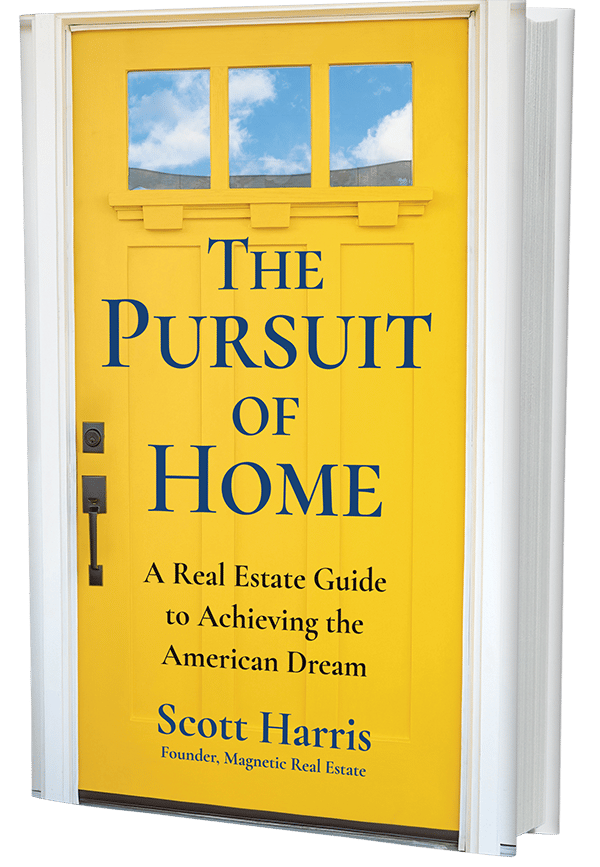
Scott Harris is a veteran real estate agent and the founder of boutique New York City real estate firm Magnetic, and the author of new book The Pursuit of Home: A Real Estate Guide to Achieving the American Dream (Matt Holt Books), available now. Pick up your own copy today!