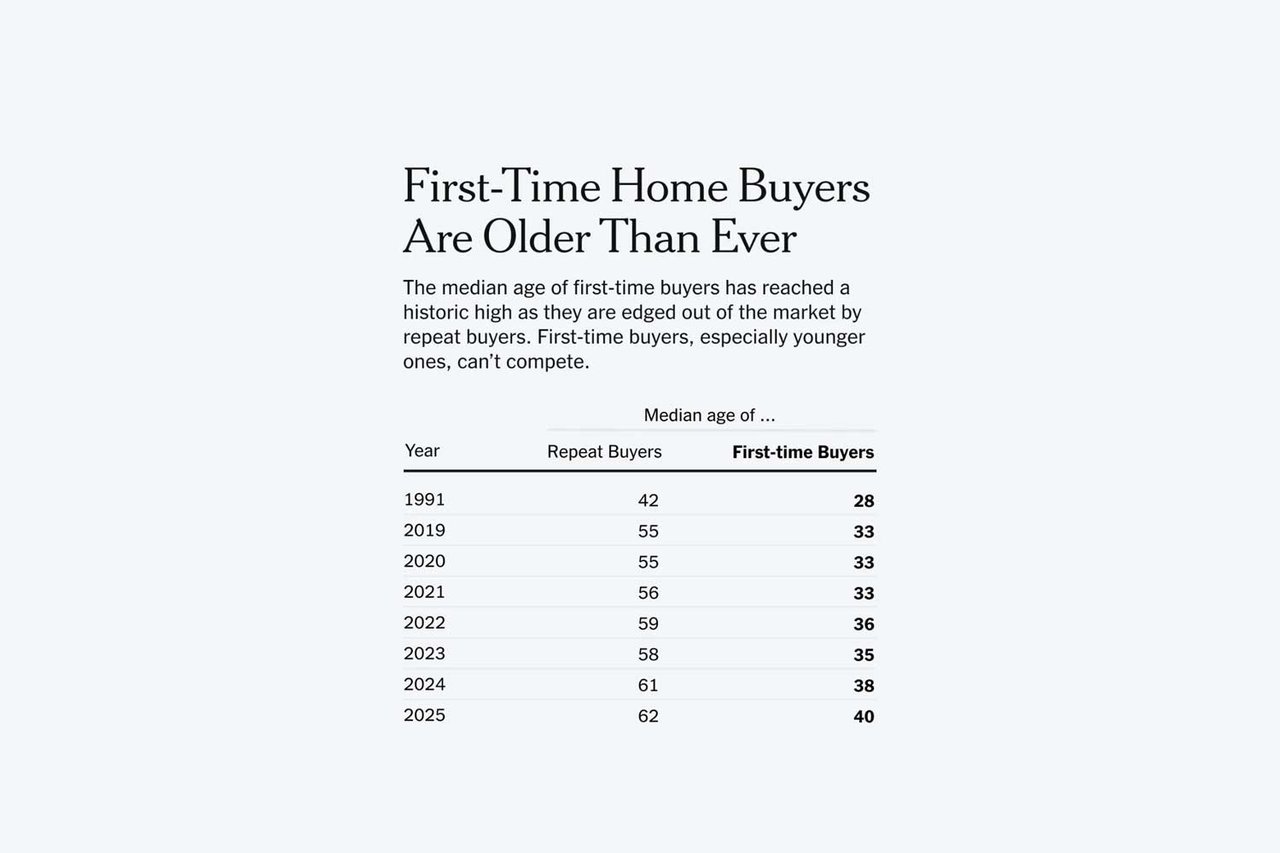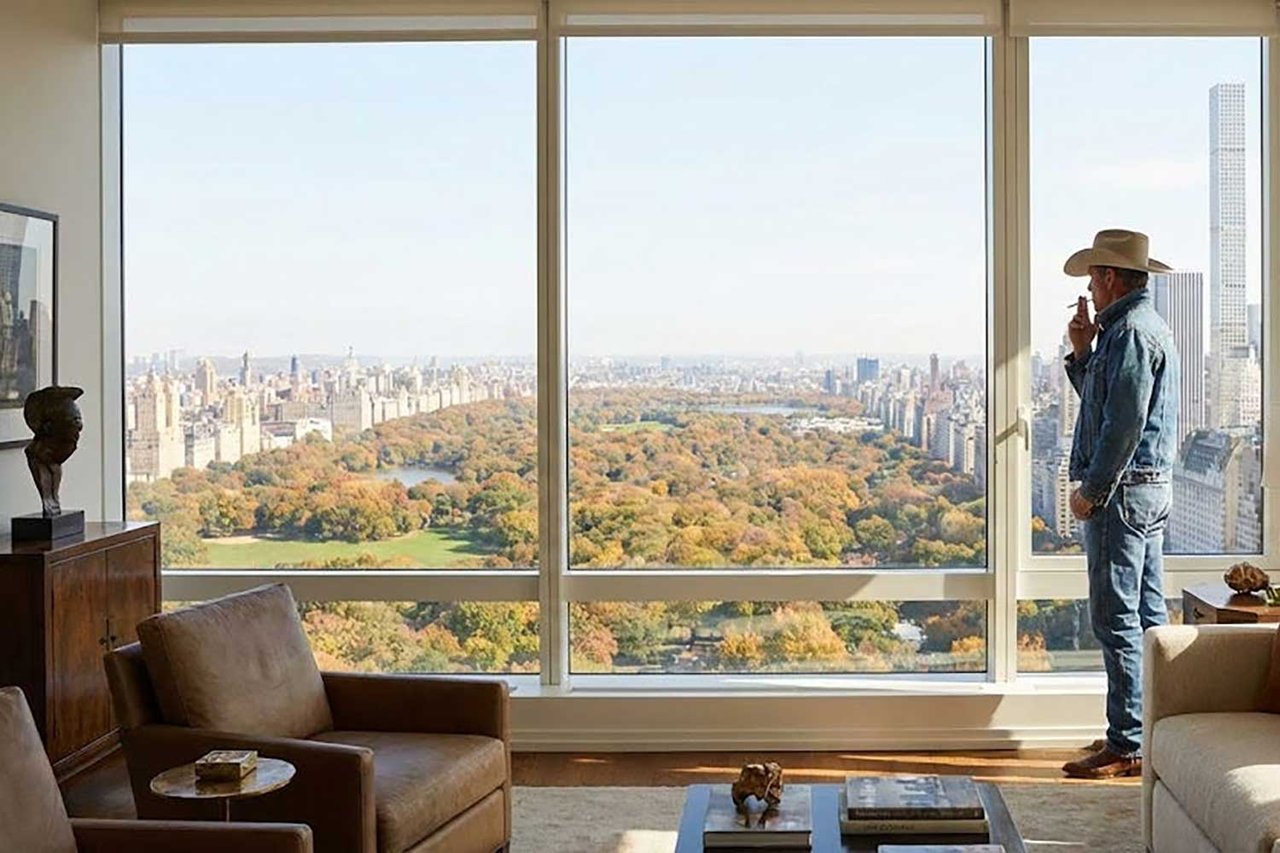
If you live in New York City, you already know the feeling, or you remember it. It’s the knot in your stomach when your lease renewal arrives. It’s the hesitation before checking your bank balance after that rent check is drawn. But new data suggests that the stress of rising rents isn’t just a financial burden—it’s a physiologicalone, too.
So here we are, at this unique crossroads of economic pressure and biological consequence. In New York City, rents have hit historic highs again, just as researchers are uncovering evidence that renting is physically aging us.
Here is why your apartment might be costing you years on your life, and why the math on buying should be pushing you away from renting, anyway. And faster than you think.
The Financial Hemorrhage: Rents are at All-Time Highs
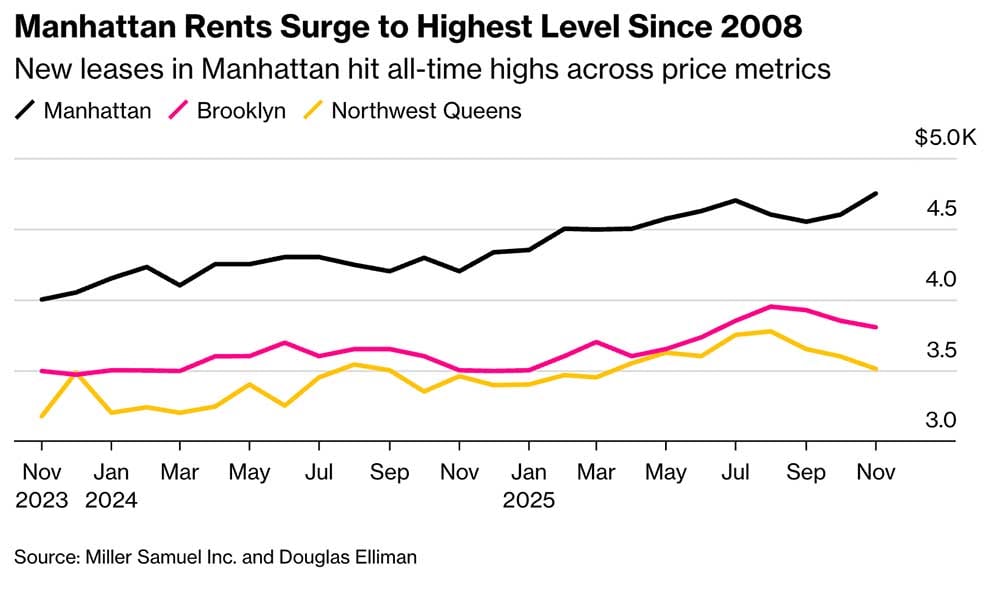
f it feels like you are paying more for less, you are. As of late 2025, the rental market in New York City has shattered previous records.
According to this November 2025 Report, the median rent in Manhattan has climbed to nearly $4,800 per month, a staggering 13% jump year-over-year. The average rent—driven by bidding wars and luxury inventory—has reached a record $5,686.
This isn’t just a Manhattan problem. Brooklyn and Queens are seeing similar surges as tenants are pushed further into the outer boroughs. And it gets worse; housing laws around rent-regulated apartments has influenced landlord thinking on whether to renovate, or to leave those apartments vacant. The impact? Thousands of units are being “warehoused,” a euphemism for keeping those units off the market, rather than put renters in who cannot ever be removed.
Look at this this way: vacancy rates hover below 2%. And therefore, as landlords hold all the cards, rents have one direction to go. Every month you rent, you are pouring money into a market that is actively inflating against you, with no cap in sight.
The Biological Toll: Renting Ages You Faster Than Unemployment
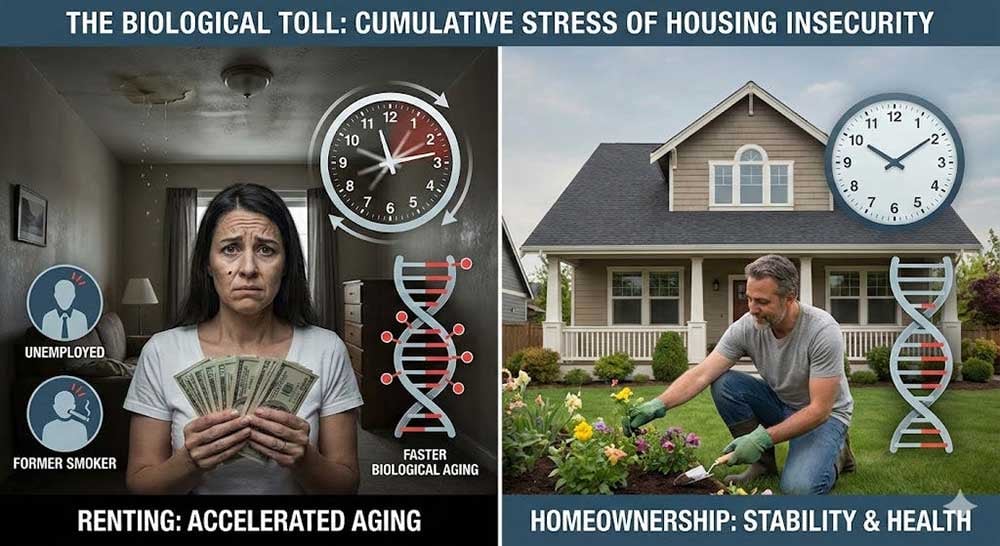
All that said, the most shocking development isn’t financial; it’s biological. A groundbreaking study published in the Journal of Epidemiology and Community Health found that renting a home in the UK is linked to faster “biological aging.”
Researchers from the University of Essex and the University of Adelaide measured DNA methylation—a chemical marker of age on our DNA—and found that renters age faster than homeowners.
The disparity is stark. The study concluded that the impact of renting on biological aging is double the impact of unemployment and 50% greater than being a former smoker (compared to a non-smoker).
Why? They believe it is the “cumulative stress” of housing insecurity. The constant threat of rent hikes, the lack of control over your living environment (mold, cold, repairs), and the psychological weight of not having a permanent base trigger chronic stress responses that degrade your health at a cellular level.
When the cost of rent exceeds 30% of your monthly income, that’s when the physical costs get noticeable, according to another study led by Princeton researchers.

The Math Has Changed: Why Buying is the “Healthier” Option
For years, I have heard from the savvy financial community who stayed away from buying. They marched to the beat of their own drum, and took their own advice. They rented and invested the difference.
But as rents spiral out of control, even that math breaks down. While mortgage rates remain elevated (hovering around 6-7%), the “buy vs. rent” equation is shifting in favor of ownership for those playing the long game. Here are additional reasons:
- The “Lock-In” Effect: The primary financial danger of renting is volatility. Your $4,800 rent could be $5,500 in two years. You see it happening even more rapidly. On the other hand, your mortgage payment is a fixed cost, with monthly building charges rising slightly each year, but with more predictability. Further, in an inflationary environment, a fixed monthly payment becomes “cheaper” over time as your income (ideally) rises and the value of the dollar falls
- The Breakeven Horizon: Real estate experts suggest that if you plan to stay in the city for 7 to 10 years, buying is increasingly advantageous. One property website’s 2025/2026 market predictions indicate that while upfront costs are high for buyers, the relentless pace of rent growth is narrowing the gap rapidly.
- Equity as Health Insurance: Beyond the asset value, apparently ownership provides the stability that the biological aging study cites as crucial for health. No landlord can sell the building out from under you. You fix the mold when you want. You paint the walls. You regain control.
The Bottom Line
We often look at housing as a line item in a budget, but it is actually the foundation of our biological well-being. Renting in New York City right now means subjecting yourself to record-high financial extraction and a level of stress that is literally shortening your life.
Is that hyperbole? Surely the uncertainty plays less of a life-or-death role as your balance sheet grows and your rents are higher. Do you want to test the hypothesis on yourself? If you have the capital for a down payment, buying isn’t just a financial hedge against inflation—it might be the best preventative medicine you can buy.
Take a look at this rent vs buy calculator or this one to see how it lines up for you. You might be surprised.
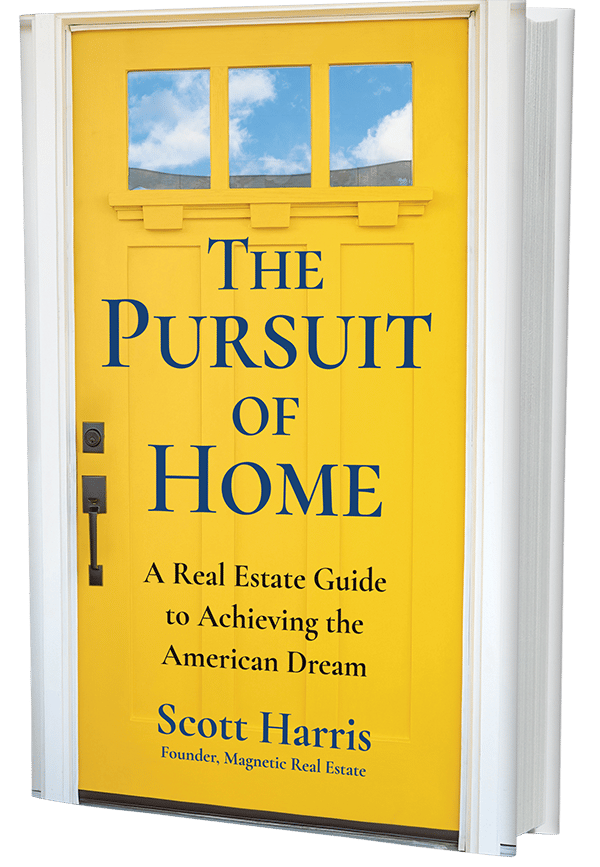
Scott Harris is a veteran real estate agent and the founder of boutique New York City real estate firm Magnetic, and the author of new book The Pursuit of Home: A Real Estate Guide to Achieving the American Dream (Matt Holt Books), available now. Pick up your own copy today!