Mickey and the Mansion
The world of theme parks and the world of real estate brokerage may seem miles apart, but they share a secret: true success lies in understanding the question beneath the question. As far as theme parks go, I’m thinking about Walt Disney World, because their management got so good that they opened the Disney Institute in 1996. One of its most intriguing business lessons ties right into the homebuying journey.
Specifically, this Disney Institute 2018 post (h/t to my friend Leora Kaye who pointed it out) shares a frequently-asked question which their employees—aka their “Cast Members”—receive from patrons: “What time is the 3 o’clock parade?”

Logically, the answer is “3 o’clock.” But any great host knows that giving the obvious answer often ends the conversation, leaving the guest unfulfilled. The real question might be, “Where’s the best spot to stand?” or “How late can I leave the ride line and still see it?” or “Will it be on time?” or “Am I in the right place?”
We learn that they tell their Cast Members to move past the literal query to deliver deeply personalized service. A good real estate agent must do the same.
The Hidden Pursuit of Comfort
When people set out on a journey—whether to a theme park or to an open house—they are, at their core, looking for comfort. Walt Disney knew this. He intentionally created Main Street USA to feature slightly smaller-sized doors, and old-timey hand-painted windows to create what Karal Ann Marling called the architecture of reassurance.
In real estate, though, buyers attempt to find comfort in their checklist. But they quickly learn that it doesn’t always work. In fact, it rarely does at first. And when a property fails to excite them, they often slip into what I call Opposite Mode, inventing excuses about paint colors, layout flaws, or the location of a bathroom to rationalize their emotional upset, to justify their rejection of that property.

This is the true parallel to the “3 o’clock parade” question. When people go to buy a home, they are asking one question, but they usually mean something else. They ask about square footage, but they are looking for a feeling. They are seeking sanctuary. They want the emotional pleasure and benefit that comes from owning a piece of the American Dream. And they can’t always articulate how this will manifest in their search.
The Lack of Free Will in Home Buying
Don’t worry; this lack of clarity is completely normal. More than that, in my work I’ve found that these deeply personal real estate preferences are often not even rational. We think we are making logical choices, but often, a subconscious, non-rational trigger is pulling the strings.
A buyer may veto a home because the kitchen reminds them of an off-putting detail from childhood, or conversely, fall in love with a home because the mosaic tile floor on the landing subconsciously initiates the bootup of an old, happy program; it recreates a happy memory from their youth. Your history, your experiences, and the 30 million real estate images seared into your mind from movies, television and advertisements since childhood all conspire to create an idea of what home is supposed to look like. Is it what you really want, though? I write about it a ton in Chapter Four of my new book (which you can check out here!). The upshot? You don’t really have as much free will in your real estate choices as you suspect you do.
Indeed, if a buyer doesn’t know what they are looking for themselves, can an agent possibly succeed?
Emotional Intelligence as the Agent’s Key to Success
The answer is undoubtedly yes, but it takes work. And it takes emotional intelligence, the key to success for a real estate agent. Emotional intelligence, which I wrote a bit about last week, is what separates an order taker from an advisor. The most effective agents must transition from being pure salespeople to being a coach, someone who can help the client confront their anxiety, overcome their limiting beliefs and uncover the invisible, unconscious preferences that define their specific needs. I call the combination of all of this a buyer’s House Language. And agent must look beyond the literal answer and probe for the deeper truth beneath the questions buyers ask.
As an agent, you’re not just managing a transaction; you’re managing one of the most emotionally bruising and stressful life transitions a person will ever face. When a client is anxious, fearful, or doubting themselves, a great agent’s work is to build a relationship, create a judgment-free zone, and instill the confidence that the client is going to succeed.
The agent’s true mission is not merely closing a deal at any cost, but rather delivering what restaurateur Will Guidara calls unreasonable hospitality—the kind of service that anticipates the meaning behind the data-gathering, fear-based emotional questions to get to the heart of things, and makes the client feel completely at home, long before the keys are handed over.
The 3 O’Clock Parade in Real Estate
My clients, customers, or guests are always telling me more than they realize. Don’t worry, I can’t read your mind. But by focusing on the emotional and the subconscious—the why behind the what—we can shift your service model from transactional to genuinely transformative.
There are questions that hint at a deeper, unseen need. By finding our “3 o’clock parade” questions, we begin with curiosity, a quest for richer discovery that turns a simple service exchange into a relationship built on trust and profound understanding.
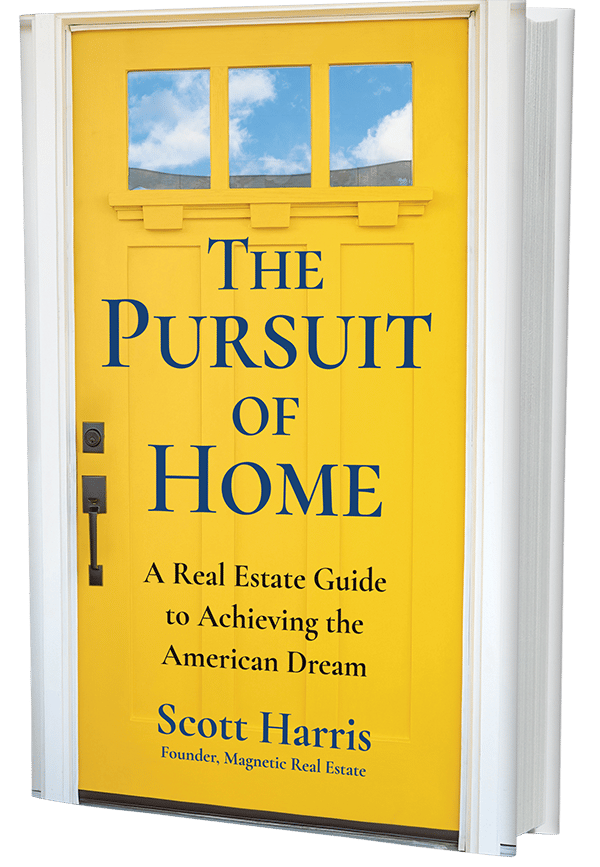
Scott Harris is a veteran real estate agent and the founder of boutique New York City real estate firm Magnetic, and the author of new book The Pursuit of Home: A Real Estate Guide to Achieving the American Dream (Matt Holt Books), available now. Pick up your own copy today!